

Read time: 10 min
📚 Browse past editions here.
( I publish this newletter daily. Noise-free, actionable, applied-AI developments only).
⚡In today’s Edition (9-Jan-2026):
🧠 Google is unleashing Gemini AI features on Gmail
👏 TODAY’S SPONSOR: China’s MiniMax just officially listed on the Hong Kong Stock Exchange today.
🏆 Gen AI chatbot website traffic for 2025.
🔬 OpenAI introduced OpenAI for Healthcare, a healthcare-focused setup of ChatGPT and API products.
🛠️ Milestone achieved for AI on solving complex math problems - directly from Terence Tao
👨🔧 GLM-4.7 remains the most capable open weights model in the Artificial Analysis Intelligence Index v4.0.
🇨🇳 DeepSeek is set to release a new AI model focused on coding this February, according to The Information.
🧠 Google is unleashing Gemini AI features on Gmail
They are putting Gemini 3 inside Gmail in 3 places: reading, searching, and prioritizing, instead of only offering basic canned “Smart Reply” style helpers.
In short, AI upgrades that had been restricted to paid accounts will now be free. AI Overviews, Help Me Write and Suggested Replies are rolling out to all. Google says “as always, you’re in control, and can choose to turn these new @Gmail features on or off,” albeit most users will turn them on without bothering to read any privacy policies.
Traditionally, Gmail would show emails that are likely matches for your search. With AI Overview, you instead get a nicely formatted AI answer that includes all the relevant information and cites the email.
Gmail can now summarize long email threads as an “AI Overview,” a short recap of the key points so you do not have to scan 40 replies. For paid users, i.e. Google AI Pro and Ultra it adds search AI Overviews that answer questions by citing emails, plus Proofread and early AI Inbox.
So you can type a question in plain English and get a direct answer that is pulled from your emails, instead of getting a list of matching messages. Google says the answer view cites the specific email it used, so you can click through and check the source when you care about accuracy.
On the writing side, Help Me Write and upgraded Suggested Replies are becoming free, meaning Gmail can draft or rewrite messages and propose replies using the thread context.
AI Pro and Ultra subscribers will also begin seeing a new proofreading tool in Gmail. Proofreading suggestions will appear as dotted underlines in your email text, offering suggestions to streamline and clarify your writing. Google says AI Proofreading can make more nuanced changes than standard spellchecking features thanks to the company’s largest and most powerful Gemini 3 models.
Google is also teasing a new look for Gmail called AI Inbox. It’s first going to a small group of “trusted testers” before a wider release. The new inbox automatically scans your unread emails and builds an interactive list with “Priorities” up top — messages that Gemini thinks matter most. Right below that is “Catch me up,” a section that summarizes less critical messages. Basically, Gemini decides what deserves your attention and what can wait.
AI Inbox will be optional at launch, but it’s easy to imagine it becoming the default layout later. Google hasn’t shared any timeline yet for when it will move past testing.
👏 TODAY’S SPONSOR: China’s MiniMax just officially listed on the Hong Kong Stock Exchange today.
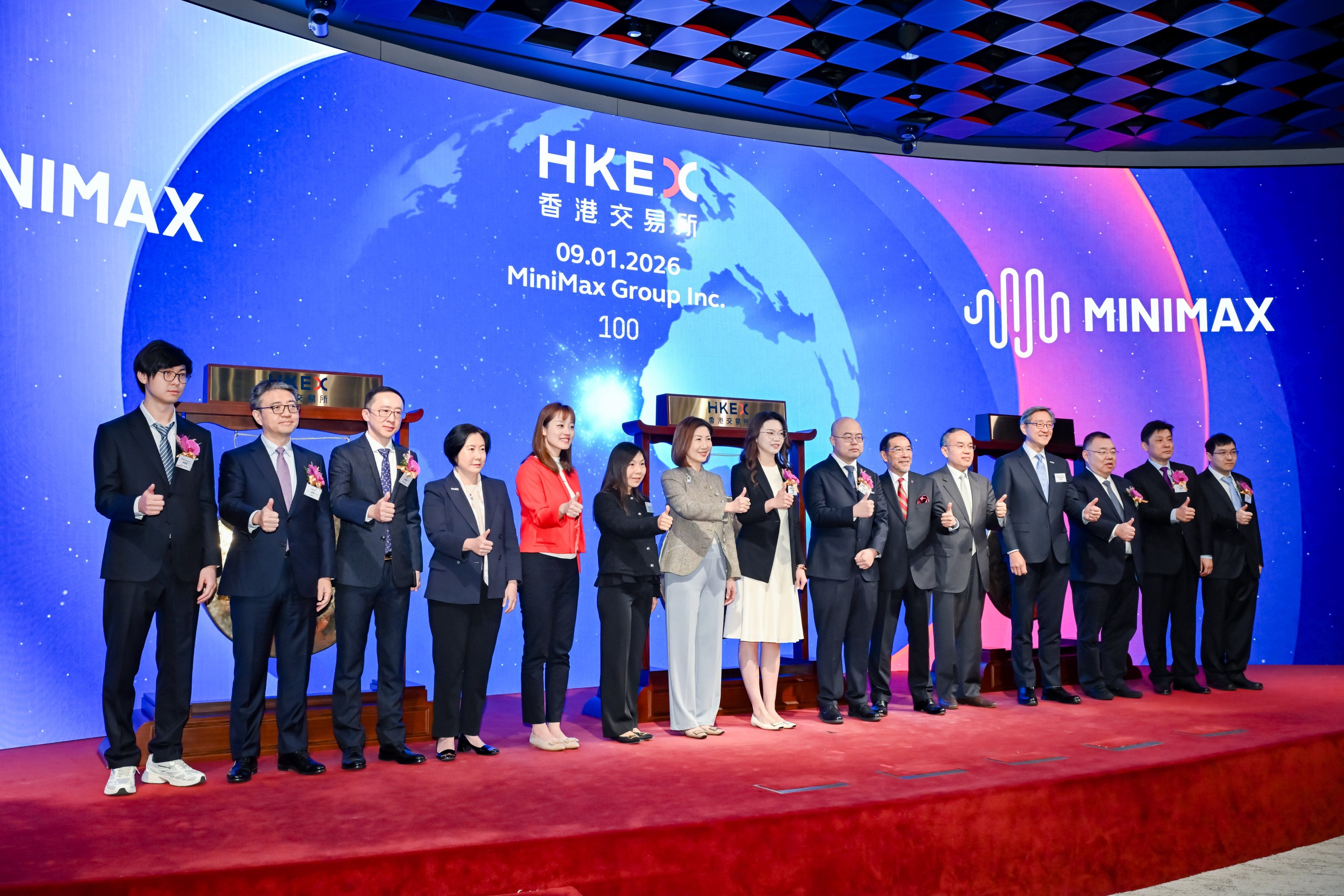
China’s AI startup MiniMax Group raises $619 million in Hong Kong IPO.
And the valuation surpassed HKD 100B (USD 12.8B), making them the only tech-sector Hong Kong IPO in the past 4 years to rise more than 100% on the first day of trading.
This public offering part of MiniMax was over - subscribed by a staggering 1,837 times. The top - tier long - term institutional investors and sovereign funds from Europe, the United States, Canada, South Africa, the Middle East, and Southeast Asia all invested
MiniMax’s consumer-focused approach drew investors who were chasing high-growth potential. Investors also liked how well MiniMax’s open source foundation models performed on major benchmarks.
Founded early 2022 by former SenseTime senior exec Yan Junjie, Shanghai startup MiniMax has been rolling out top-scoring SOTA models across text, audio, images, video, and music. It has since become one of the fastest - growing AI unicorns globally
They also have popular apps like Hailuo AI, a video generation tool, and Talkie, an AI character interaction app that enables users to engage with AI-powered virtual personas.
Many analyst have already said 2026 will be the year of IPOs, and it just got started. AI is already dominating investor interest worldwide, and this year the expectations for Chinese AI listings are quite high.
🏆 Gen AI chatbot website traffic for 2025.
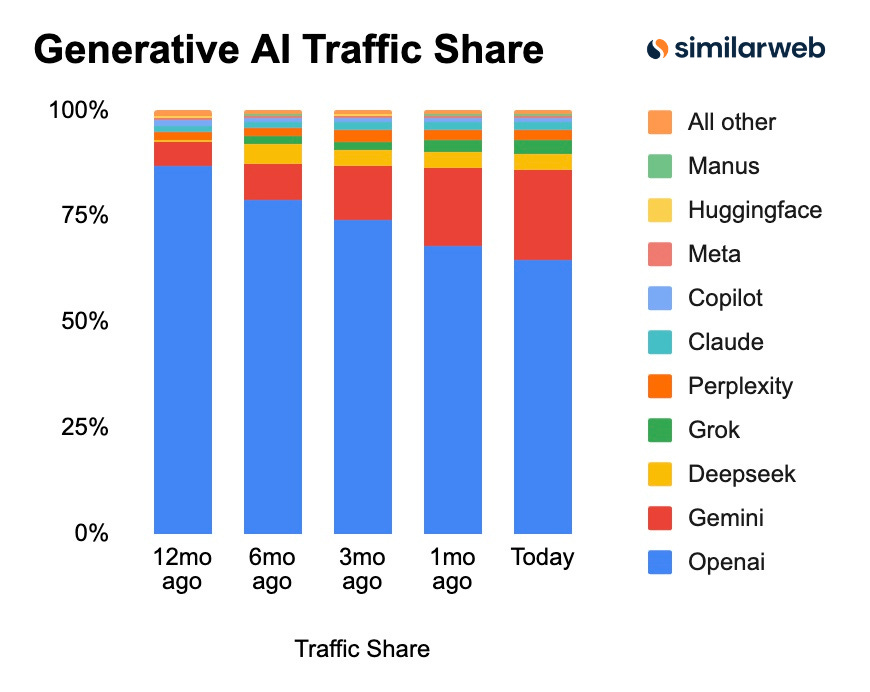
Gemini’s rise is a fantastic story of classic distribution win: Google can place Gemini right where people already start, like search and its own products. What really stands out is that the “lost” share did not get split evenly across a bunch of smaller players.
ChatGPT dropped about 22.2 points, Gemini gained about 15.8 points, and everyone else is still stuck in low single digits. Also, given these traffic share numbers are a relative, if total web visits to these tools are growing fast, ChatGPT can lose share and still grow in raw usage numbers (i.e. absolute total web visits numbers).
🔬 OpenAI introduced OpenAI for Healthcare, a healthcare-focused setup of ChatGPT and API products.
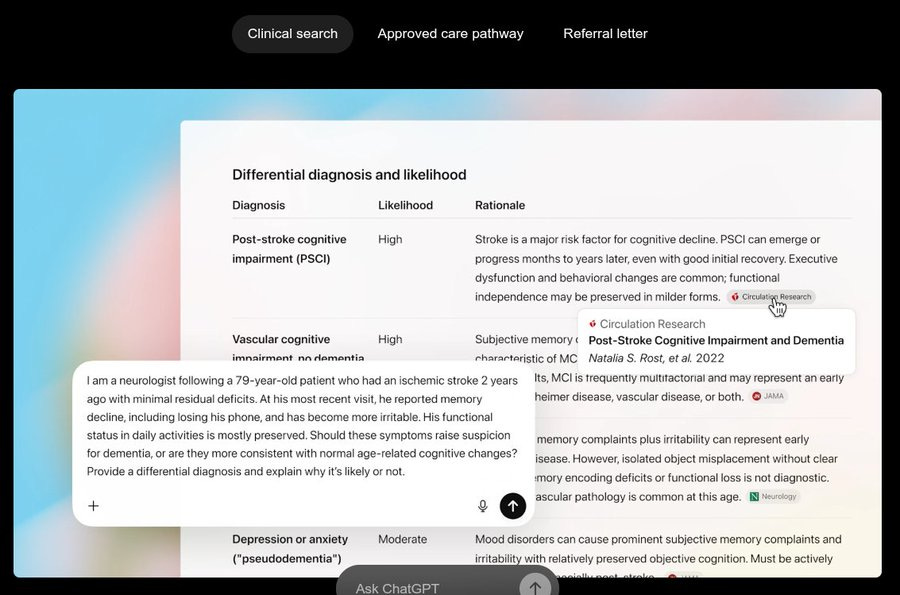
OpenAI has launched a suite of tools for healthcare enterprises. The idea behind OpenAI for Healthcare is to help organizations deliver more consistent and high-quality care while maintaining Health Insurance Portability and Accountability Act (HIPAA) compliance
Its a secured workspace for clinicians, admins, and researchers, with role controls via SAML single sign-on (SSO) and SCIM.
adds evidence retrieval with source citations, plus integrations that pull in local policies from tools like Microsoft SharePoint. It also offers reusable templates for notes, discharge summaries, patient instructions, letters, and prior authorization drafts. For HIPAA compliance support, it offers audit logs, data residency options, customer-managed encryption keys, and no training on customer content.
The tool’s responses draw on millions of peer-reviewed studies, public health guidance and clinical guidelines and will offer clear citations, the announcement pledged.
OpenAI has partnered with over 260 doctors across 60 countries in the last two years to evaluate GPT-5.2 model performance, using real clinical scenarios. The group has reviewed over 600,000 model outputs in 30 areas of focus. Two different OpenAI benchmarking tools find OpenAI models outperform competitors and human baselines.
🛠️ Milestone achieved for AI on solving complex math problems - directly from Terence Tao
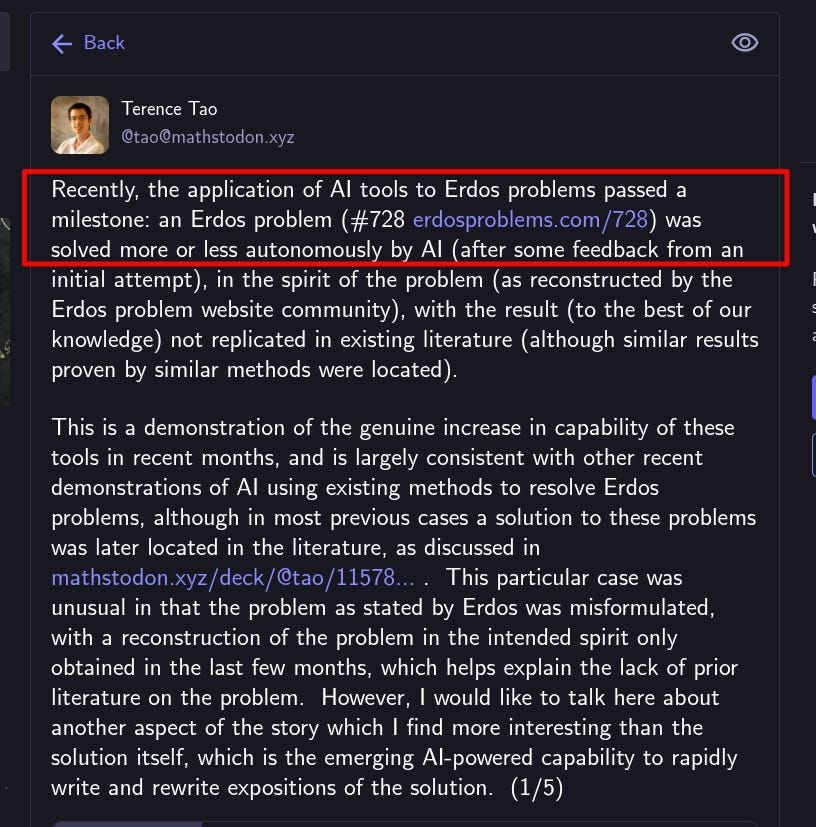
“An Erdos problem (#728 ) was solved more or less autonomously by AI”
GPT-5.2 Pro was able to produce its first proof.
After some back-and-forth prompting, GPT-5.2 pro was able to come to a final proof that was not there anywhere in existing literature.
the proof didn’t just stay as a natural-language argument written by a chatbot. Parts of it were pushed into Lean, which is a formal proof assistant.
The end result was a Lean-verified proof, meaning the argument was not just persuasive, it was mechanically checked.
👨🔧 GLM-4.7 remains the most capable open weights model in the Artificial Analysis Intelligence Index v4.0.
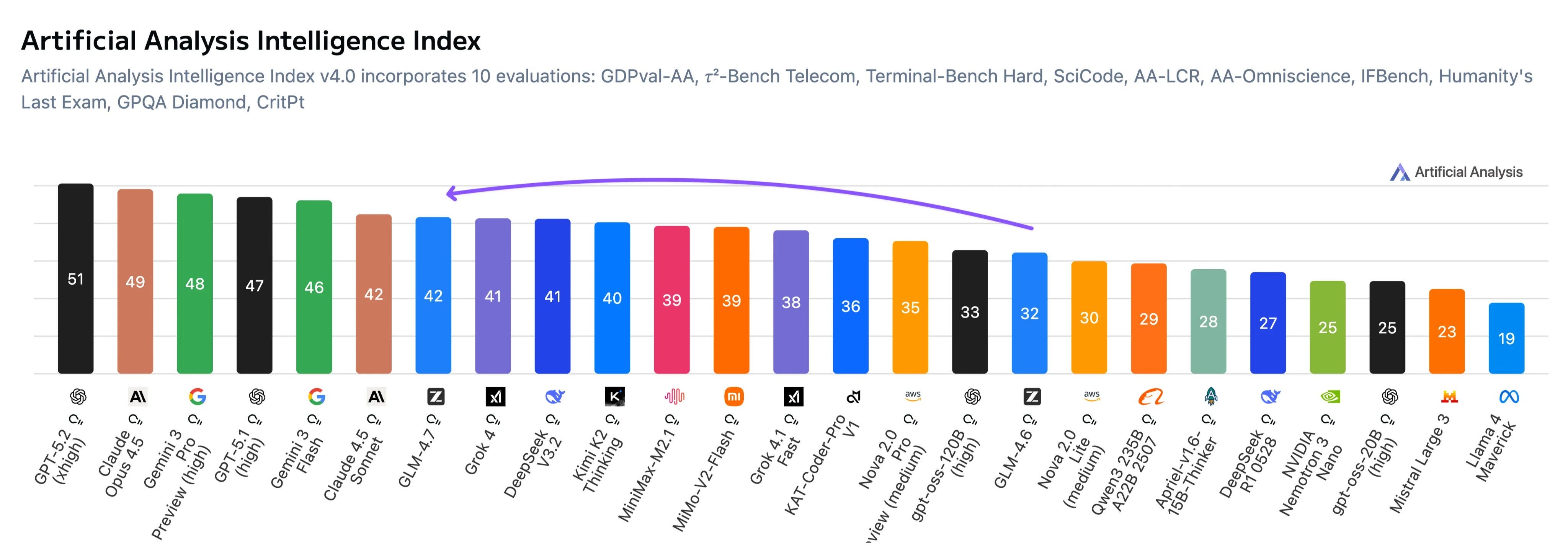
It ranks below GPT-5.2 (xhigh) at 51, but it is now ahead of DeepSeek V3.2 at 41.
GDPval-AA, an ELO head-to-head benchmark for realistic terminal-and-web tasks, rates GLM-4.7 at 1193.
That helps it score 55 on the Agentic Index, 3rd overall behind Claude 4.5 Opus and GPT-5.2 at 59.
AA-Omniscience, which rewards correct answers and penalizes hallucinations, puts it at -36, an 8-point gain.
GLM-4.7 stays text-only with a 200K-token context window and MIT-licensed weights.
Self-hosting needs about 710GB BF16 memory for weights, which limits single-node deployment.
For open-weight users, the standout is stronger agentic performance without moving to proprietary systems.
For product teams, longer outputs and negative reliability scores are the main operational tradeoffs.
🇨🇳 DeepSeek is set to release a new AI model focused on coding this February, according to The Information.
DeepSeek is expected to launch a next-generation model called V4 in mid-February. it’s reportedly got super serious coding skills, enough to threaten many current SOTA models.
People familiar with internal testing said V4 could beat Anthropic’s Claude and OpenAI’s GPT series on coding tasks.
The same report said V4 made progress on handling extremely long coding prompts, which can matter on complex projects.
That’s a wrap for today, see you all tomorrow.
really excited for this not going to lie!