

Read time: 10 min
📚 Browse past editions here.
( I publish this newletter daily. Noise-free, actionable, applied-AI developments only).
⚡In today’s Edition (24-Feb-2026):
🗞️ IBM stock dipped more than 13% once Anthropic released a blog saying Claude can optimize legacy COBOL code
🗞️ CNBC: OpenAI is teaming up with Accenture, Boston Consulting Group, Capgemini, and McKinsey to solve the “last mile” problem of getting AI into daily business tasks.
🚨 The US Defense Secretary Pete Hegseth is calling in Anthropic CEO Dario Amodei to the Pentagon on Tuesday morning to discuss the military use of Claude.
🗞️ The super-viral blog by Citrini, ‘THE 2028 GLOBAL INTELLIGENCE CRISIS’ - a must-read for real. 🎯
🗞️ OpenAI just added WebSocket support to their Responses API to make AI agents run much faster.
🗞️ Andrej Karpathy advocates building CLIs for AI agents in viral X post
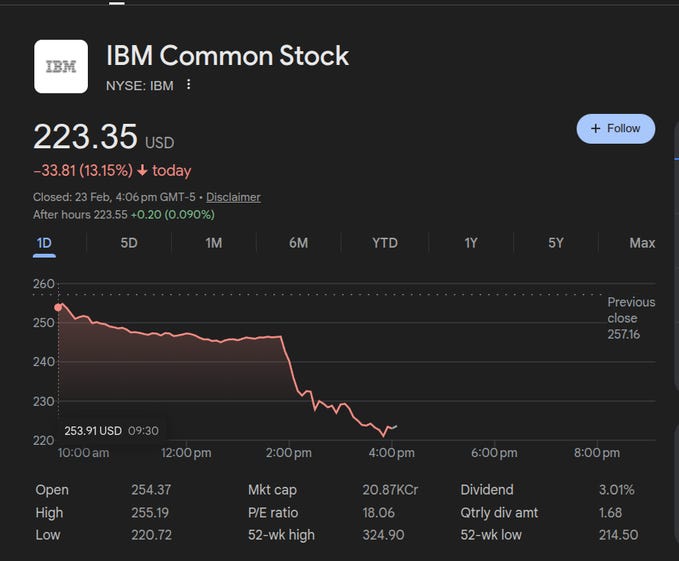
🗞️ IBM stock dipped more than 13% once Anthropic released a blog saying Claude can optimize legacy COBOL code - lost $31 Bn in 1 Day
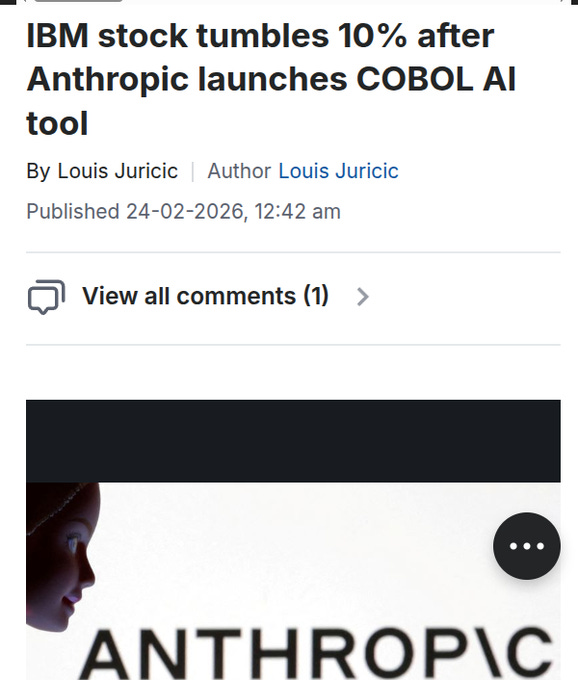
IBM is the latest AI casualty. Shares tank 13% on AI fear.
“SaaSocalypse.” is in full swing, the death of the “Per-Seat” model of Software. IBM has a massive business built on “modernizing” old systems. It’s slow, expensive, human-heavy work.
When Anthropic shows that Claude can map out and fix that old code in a fraction of the time, serious question arising on IBM’s “army of humans” model to create per-seat revenue. Investors are terrified, the market is realizing that if the AI is the “worker,” the old software subscription models are basically broken.
“Hundreds of billions of lines of COBOL run in production every day, powering critical systems in finance, airlines, and government. Despite that, the number of people who understand it shrinks every year, AI excels at streamlining the tasks that once made COBOL modernization cost-prohibitive.”
Claude Code can help modernize COBOL codebases by mapping dependencies across thousands of lines of code, documenting workflows and identifying risks that “would take human analysts months to surface,” Anthropic said.
IBM stock took a massive 13% hit, sinks the most since 2000.
COBOL is a very old coding language that most people stopped using decades ago, yet it still runs the world’s most critical systems like banks and government agencies. These systems usually run on IBM mainframes, which are giant, ultra-reliable servers that have been the backbone of IBM’s business for a long time.
In the past, moving away from COBOL was a nightmare because you needed an army of human experts to spend years manually figuring out how the old logic worked. Anthropic says its Claude Code tool can now automate that research, letting the AI map out workflows and translate the old code into modern languages almost instantly.
Investors are panicking because if companies can use AI to code their way out of legacy systems, they might not need IBM’s expensive hardware or consulting services anymore. Software companies are having a rough 2026 because everyone is worried about how AI might mess with their business models. A big exchange traded fund that tracks these stocks has already dropped 27% this year, which is the worst 3 month stretch it has seen since the global financial meltdown back in 2008.
🗞️ CNBC: OpenAI is teaming up with Accenture, Boston Consulting Group, Capgemini, and McKinsey to solve the “last mile” problem of getting AI into daily business tasks.
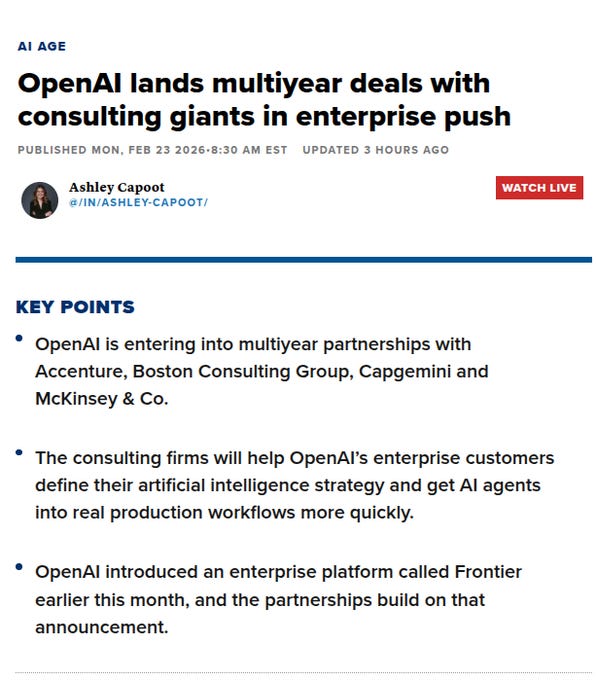
The focus is on a new platform called Frontier, which acts as a central brain that connects all the different data and software within a single organization. This setup makes it much easier to create AI agents. OpenAI is even sending its own engineers to work directly inside these partner firms to make sure the tech is set up correctly and safely.
The business side of this is huge because corporate clients already make up 40% of OpenAI’s revenue, and they expect that to hit 50% by the end of 2026. By letting consultants handle the strategy and setup, OpenAI can scale its technology to thousands of companies without needing to hire an infinite number of staff.
🚨 The US Defense Secretary Pete Hegseth is calling in Anthropic CEO Dario Amodei to the Pentagon on Tuesday morning to discuss the military use of Claude.

These talks are reportedly on the verge of a total collapse because Anthropic is holding firm on their rules for how the military handles their software.
🗞️ The super-viral blog by Citrini, ‘THE 2028 GLOBAL INTELLIGENCE CRISIS’ - a must-read for real. 🎯
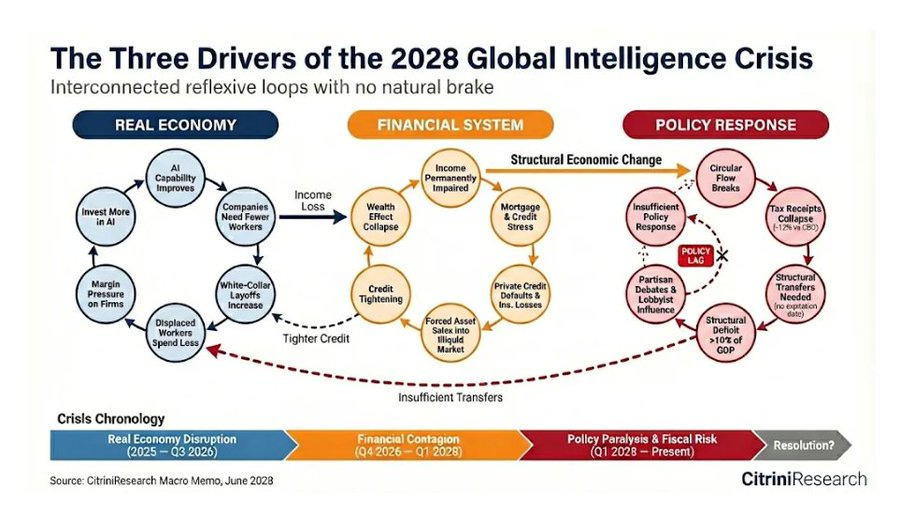
The big idea is this: for modern history, human intelligence was the most scarce and valuable economic resource.
If society makes intelligence cheap and abundant, human labor loses its premium value. Because the entire global financial system was explicitly built around humans earning high wages, abundant AI does not just disrupt jobs, it fundamentally breaks the foundation of the economy.
The authors see AI capabilities accelerating so fast that companies are firing highly paid white collar workers and replacing them with autonomous agents. This creates a devastating, unstoppable loop.
The displaced professionals take massive pay cuts or move to gig work, so they stop buying extra goods. Consumer businesses lose revenue, so they fire more people and buy more AI to protect their margins, which only accelerates the job losses.
At the same time, personal AI agents destroy middleman businesses. Because AI does not get lazy, it instantly cancels unused subscriptions, auto negotiates bills, and bypasses credit card networks to route payments for a fraction of a penny. Entire industries built on consumer friction and brand loyalty collapse.
This breaks the private credit market. Billions of dollars were loaned to software companies assuming their subscription revenues were permanent. When AI agents easily replicate these software tools, the revenues vanish, causing massive loan defaults that threaten the life insurance and retirement funds backing them.
The housing market follows. The $13 trillion mortgage system is built on the assumption that prime borrowers will maintain their high salaries for decades. Unlike the 2008 housing crash, these were fundamentally good loans made to people with excellent credit. But as AI permanently destroys earning power, perfectly underwritten mortgages start defaulting.
Even the government breaks. Federal tax revenue relies heavily on taxing human wages. As AI shifts wealth from human labor to the owners of computer servers, income tax receipts plunge right at the exact moment millions of displaced citizens need government bailouts.
🗞️ OpenAI just added WebSocket support to their Responses API to make AI agents run much faster.
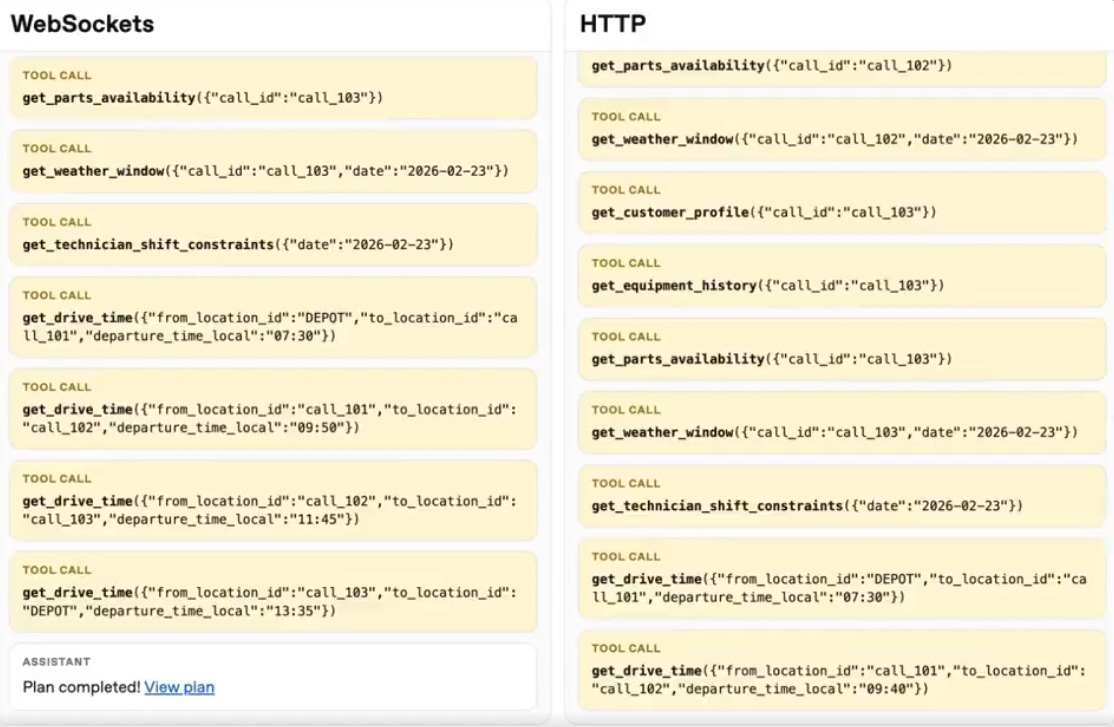
This update cuts waiting time by up to 40% when the AI repeatedly uses external tools.
Normally an AI program sends the entire conversation history every time it asks a new question. OpenAI fixed this massive delay by keeping a permanent two-way tunnel open.
The server now holds recent memory locally so the agent only sends tiny new pieces of information. Coding assistants like Cursor are already seeing a 30% speed boost because of this continuous data stream. A solid step for making background AI workers viable.
🗞️ Andrej Karpathy advocates building CLIs for AI agents in viral X post
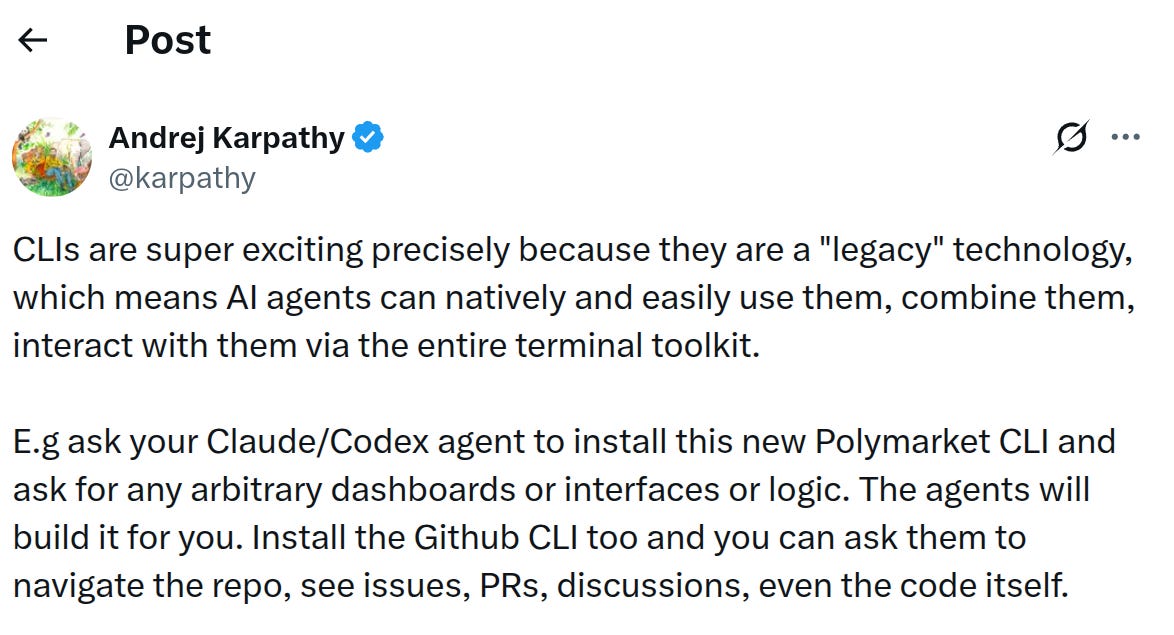
Because AI process text naturally, they can easily read and write these text commands to operate any software.
If you have any kind of product or service think: can agents access and use them?
- are your legacy docs (for humans) at least exportable in markdown?
- have you written Skills for your product?
- can your product/service be usable via CLI? Or MCP?
- ...
It’s 2026. Build. For. Agents.
That’s a wrap for today, see you all tomorrow.