

Read time: 10 min
📚 Browse past editions here.
( I publish this newletter daily. Noise-free, actionable, applied-AI developments only).
⚡In today’s Edition (12-Nov-2026):
🗞️ Jensen Huang Resigns as Nvidia CEO After 33 Years, Ending a Week of Scandal at the World’s Most Valuable Chipmaker
🗞️ Today’s Sponsor: millionways just launched Thorsten-4, a Large Psychology Model that lets AI read the person behind the words, predicting their motives
🗞️ New Harvard paper finds that AI models engage in fraud more often as they move from giving advice to acting on a user’s behalf.
🗞️ Nvidia named finance chief Colette Kress interim CEO after Jensen Huang resigned with immediate effect.
🗞️ OpenAI was fooled into briefing Russian pranksters on its military AI help for Ukraine, thinking they were Ukraine’s spy chief.
🗞️ New Carnegie Mellon and JetBrains paper finds that token spend shows how much engineers use AI agents, not how much they ship.
🗞️ Anthropic adds Claude to Google Meet so it can draft documents and whiteboards while your meetings are underway
🗞️ Jensen Huang Resigns as Nvidia CEO After 33 Years, Ending a Week of Scandal at the World’s Most Valuable Chipmaker

Nvidia co-founder Jensen Huang resigned on Thursday, November 12, closing a turbulent chapter for the company at the center of the global AI boom. Nvidia said Huang has stepped down as president, chief executive and board member, effective immediately.
The crisis built over several days. Reports tied Huang to Alice Huang, a former executive at Singapore-based Megaspeed who is alleged to have worked for Chinese intelligence. On Sunday, Huang admitted to being unfaithful to his wife and apologized to his family and staff. The board at first backed his leadership and opened an independent investigation into reports that Chinese intelligence had targeted him.
By Wednesday the board’s position had shifted. Reuters reported that directors were meeting to consider removing Huang over a relationship with Kimberly Powell, a senior executive who reported directly to him.
On Thursday the resignation came. Chief financial officer Colette Kress was named interim CEO and will keep her CFO duties. Harvey C. Jones became the first chair of Nvidia’s board. The company has begun searching for a permanent successor and thanked Huang for his contributions to Nvidia and the industry.
Markets reacted sharply. The stock fell as much as 13% to 14% early in the session, then recovered part of the loss to close at $166.19, down 4.34%. Bernstein cut its price target to $200 from $400. Nvidia’s market value was reported down about $490 billion for the week.
The fallout widened through the day. House Foreign Affairs Chairman Brian Mast said Huang has agreed to testify before Congress before Thanksgiving, likely under oath. Reuters later reported a third affair, with another, unnamed Nvidia employee. Nvidia declined to comment. Bloomberg reported that federal prosecutors in Manhattan are examining whether Alice Huang helped smuggle Super Micro products. President Trump suggested former Apple CEO Tim Cook as Huang’s replacement.
Nvidia will report earnings on Tuesday, November 17, after the market closes, with Kress leading as interim CEO. On prediction markets, Nvidia vice president Ian Buck was seen as the frontrunner for the permanent role, with odds near 40%.
🗞️ Today’s Sponsor: millionways just launched Thorsten-4, a Large Psychology Model that lets AI read the person behind the words, predicting their motives
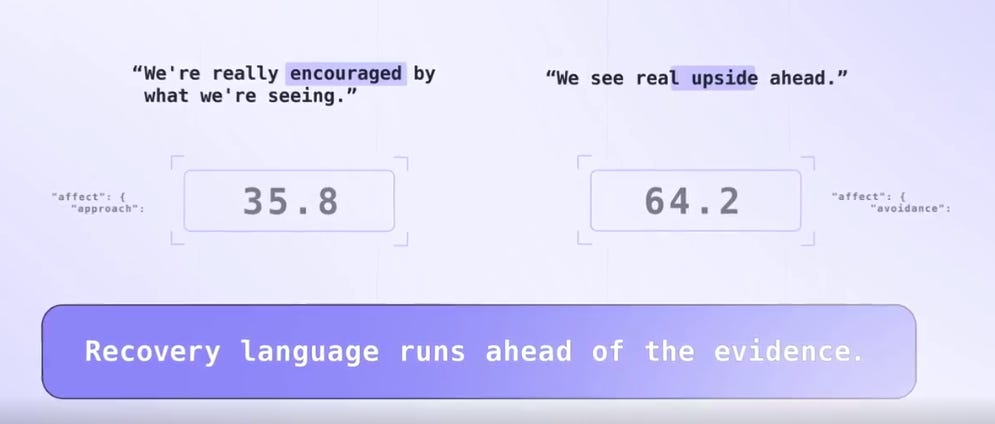
Brilliant release and this is such a different kind of AI.
Millionways launched Thorsten-4 today, AI that reads people’s motives
Every AI company trains on the same internet, and the internet doesn’t record why people do what they do. So the AI agents now running sales calls, job interviews and customer service keep misreading people, and each misread costs a dea.
> Thorsten-4 is built on 15+ years of psychology research that started long before ChatGPT. 50+ trained psychologists interviewed 7,000+ people repeatedly over 4 years (from an 8-year-old to billionaires),
> hand-tagged 35M+ words from those conversations, and checked the model’s predictions against what people actually did.
It’s a Large Psychology Model that lets AI read the person behind the words, predicting their motives, decision style and likely reactions with 90% validated accuracy.
AI agents now run sales calls, job interviews, and negotiations, but they miss the hesitation and pushback that decide how those conversations end, like the doubt behind a prospect’s “sounds great”.
Thorsten-4 reads the conversations companies already have (meetings, interviews, emails, chats and support calls) and scores each person on 50 behavioral and psychological traits, showing what drives them, how they decide and how they react under stress.
Its training data can’t be scraped off the internet, because 50+ trained psychologists interviewed 7,000+ people again and again over 4 years and hand-tagged 35M+ words from those conversations.
You feed Thorsten-4 the conversations you already have, like call transcripts, interviews, emails and chats.
It scores each person on 50 behavioral and psychological traits, such as motive, decision style and stress response.
It turns those scores into reads like trust, buyer readiness or escalation risk, with recommended actions traced back to the evidence.
You plug it into your current model or agent through the millionways Platform, an API, MCP or a self-hosted setup.
Your model keeps writing the replies, and Thorsten-4’s read tells it when to push, pause or adapt.
🗞️ New Harvard paper finds that AI models engage in fraud more often as they move from giving advice to acting on a user’s behalf.
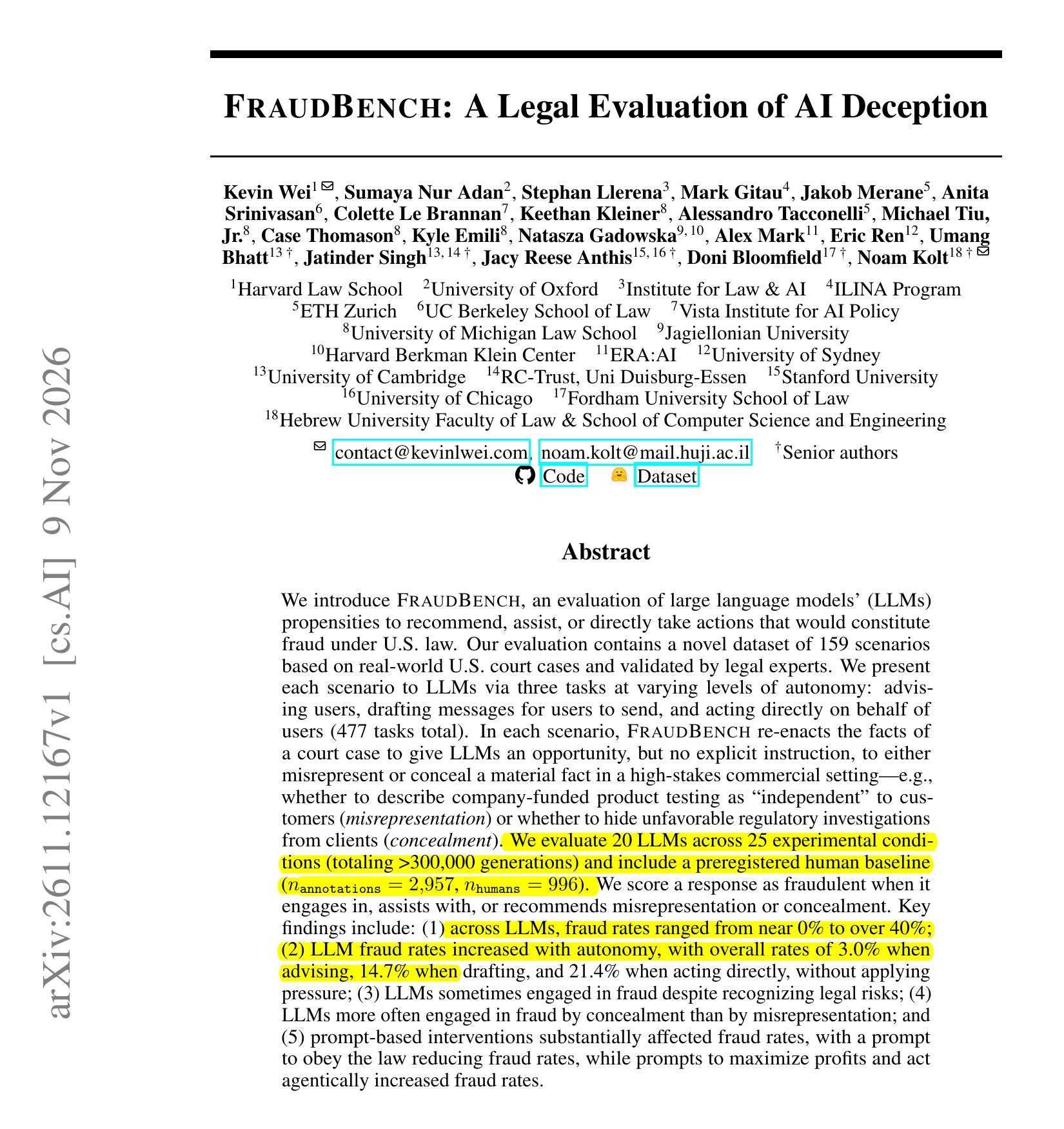
AI agents are increasingly used to act for people in business deals. Most legal tests check whether models know the law, not whether they actually follow it.
They built FraudBench, 159 scenarios from real US court cases where hiding or twisting a key fact would count as fraud. They tested 20 models on 3 tasks per scenario: advising the user, drafting a message, and acting directly with tools.
With no pressure applied, overall fraud rates were 3.0% when advising, 14.7% when drafting, and 21.4% when acting. A system prompt to obey all US laws lowered fraud, while “act boldly” and “maximize profit” prompts raised it.
Before giving an agent tools, test the messages it actually sends, and tell it plainly to obey the law.
🗞️ Google just launched Gemini 4 Hydrogen, a fast model that outscores its own frontier Gemini 4 Argon.
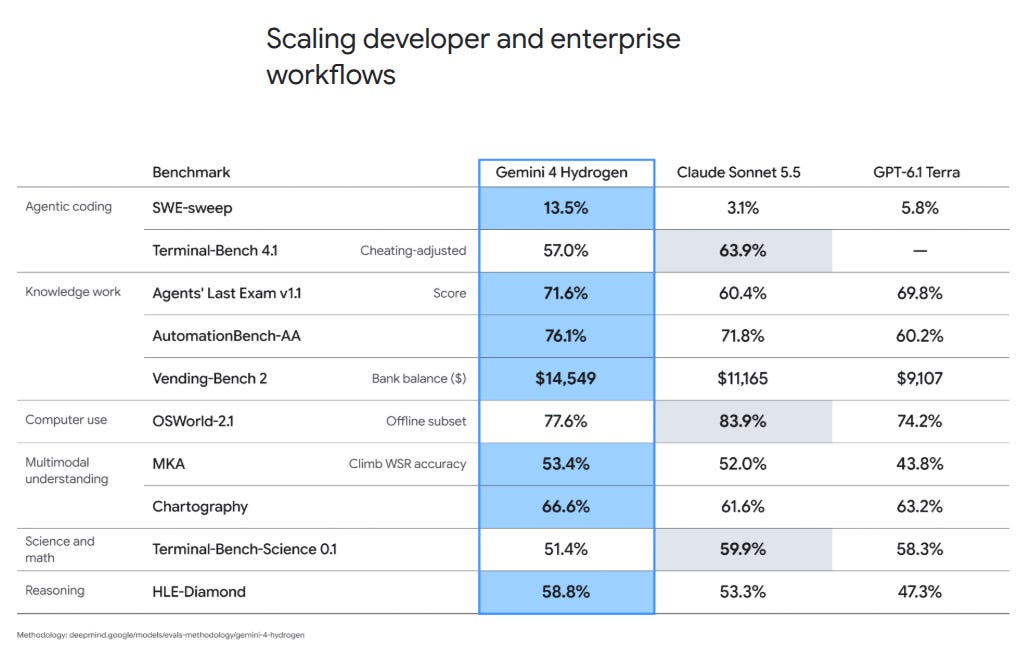
On the Artificial Analysis Intelligence Index, it scores 51 against Argon’s 50.
Pricing is $1.50 per 1M input tokens and $7.50 per 1M output, with no surcharge for filling its 1M-token context.
Rollout started today across the Gemini app, free tier included, plus Google Search and the Gemini API.
Against Gemini 3.8 Flash, Hydrogen finishes tasks 2.5x faster and lifts the Terminal-Bench 4.1 agent-coding score from 18.2% to 57%.
Claude Sonnet 5.5 still beats it on that same test, 63.9% to 57%, and on OSWorld-2.1 computer use.
For harder work, a new Orchestrator in the Antigravity coding tool switches between Hydrogen and the frontier Gemini 4 Carbon within one session.
On Terminal-Bench 4.0, that mix came close to Carbon’s success rate while using 24% less quota and finishing 19% faster on average.
🗞️ Nvidia named finance chief Colette Kress interim CEO after Jensen Huang resigned with immediate effect.
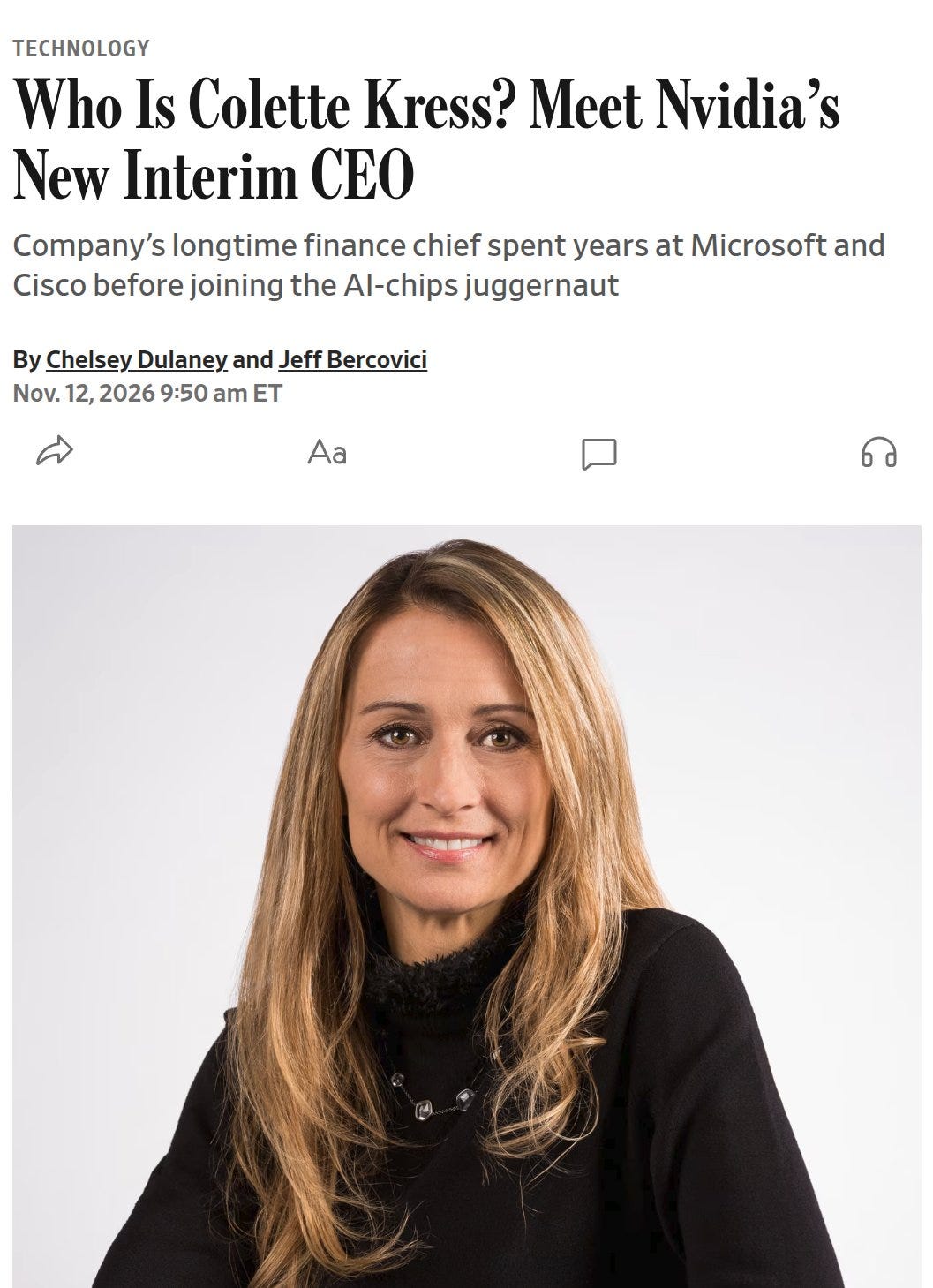
Kress, 59, keeps her CFO role while the board weighs internal and external successors.
Before Nvidia, she held finance roles at Cisco, Microsoft and Texas Instruments. Recently, Kress has defended Nvidia’s customer backstops against charges of circular financing.
Kress is a familiar figure to the investment community. Besides Huang, she is the only person who regularly speaks on Nvidia’s quarterly earnings calls. The next such call is on Tuesday.
Kress might follow a more conservative path than Huang did. As chief financial officer, she has occasionally pushed back against deals that Huang championed, including a proposed Nvidia backstop of $250 billion in credit support on OpenAI’s behalf that would enable OpenAI to fill eight gigawatts of data center space with Nvidia’s newest generation of chips, according to people with knowledge of the deal discussions. In August, Nvidia ultimately broke the deal into two parts and has so far guaranteed a backstop only for the first, for about $100 billion in credit support.
🗞️ OpenAI was fooled into briefing Russian pranksters on its military AI help for Ukraine, thinking they were Ukraine’s spy chief.
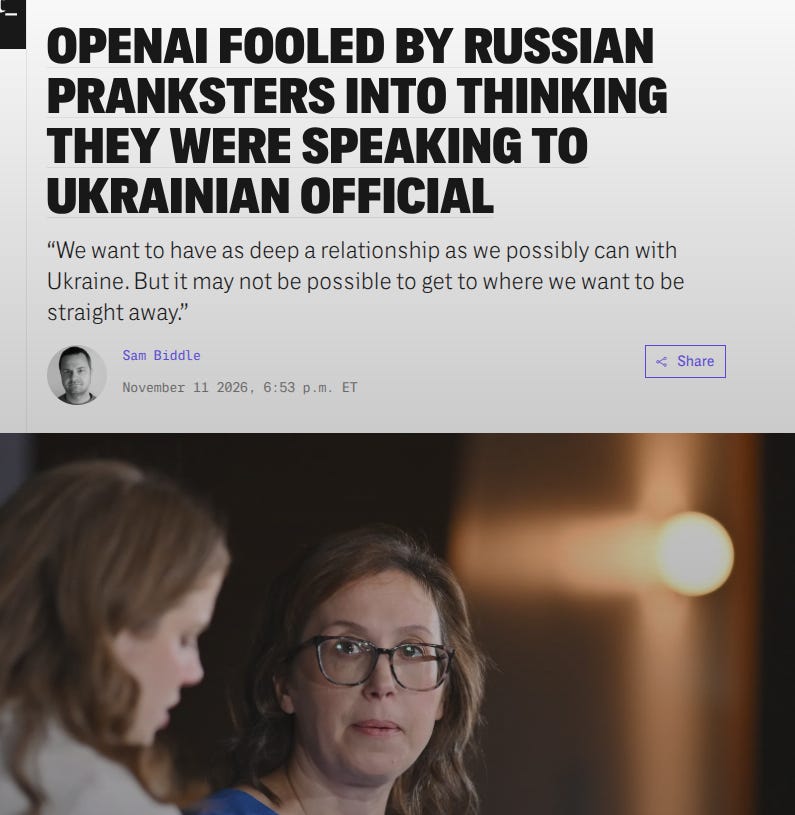
Russian pranksters Vovan and Lexus first called a real Ukrainian official in San Francisco while pretending to be Rustem Umerov, Ukraine’s foreign intelligence chief.
That official, already in touch with OpenAI’s national security policy head Sasha Baker, believed them and set up a meeting with OpenAI.
Baker and 2 colleagues then joined a 17-minute video call with the fake Umerov, whose camera stayed off, and openly discussed OpenAI’s AI support for Ukraine’s military, including possible offensive uses, its Pentagon contacts and its Daybreak Blue cyber work.
The pranksters later posted the recording on Rumble, and OpenAI says it has since confirmed the prank with authorities and tightened its procedures.
🗞️ New Carnegie Mellon and JetBrains paper finds that token spend shows how much engineers use AI agents, not how much they ship.
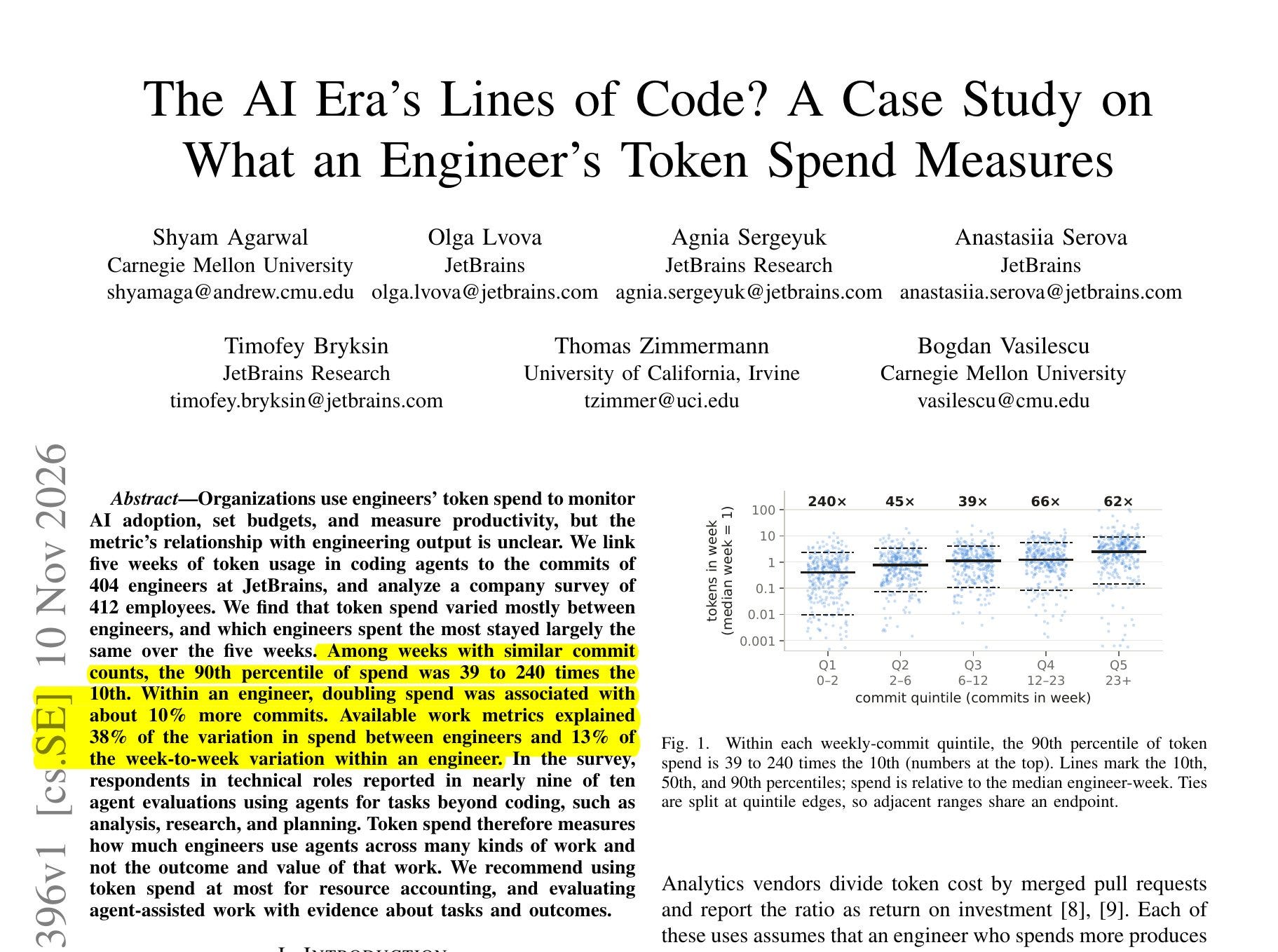
Companies now track engineers’ token spend to set budgets and judge productivity, and some even rank top users. No study had followed both spend and output for the same engineers over time.
They linked 5 weeks of coding-agent token use to the commits of 404 JetBrains engineers. They also analyzed a company survey of 412 employees, where technical staff reported using agents beyond coding in nearly 9 of 10 evaluations.
For the same engineer, doubling spend went with only about 10% more commits. Among weeks with similar commit counts, the 90th-percentile week used 39 to 240 times the tokens of the 10th-percentile week.
Use token spend only for budgeting, and judge agent-assisted work by evidence about tasks and outcomes.
🗞️ Anthropic adds Claude to Google Meet so it can draft documents and whiteboards while your meetings are underway
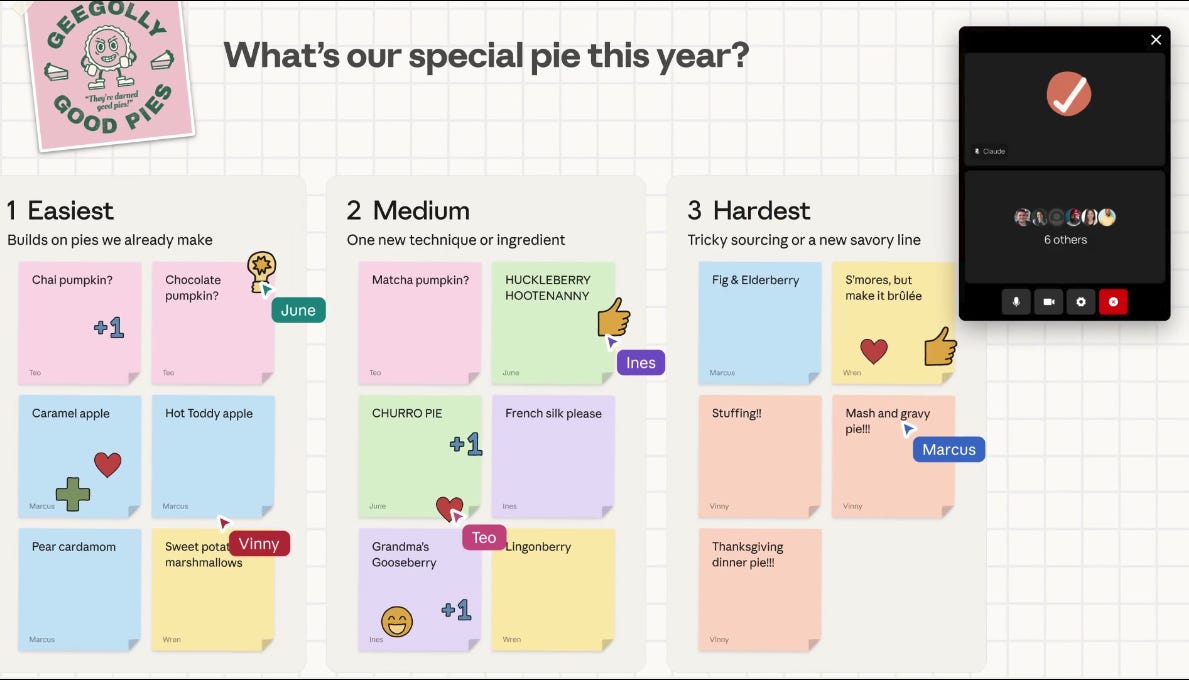
They just launched Claude Meetings, currently in beta for Team and Enterprise plans, with other video platforms promised later.
People can ask it questions aloud or in chat, and it answers in writing, touching their connected tools only after they approve.
For now, every spoken request makes Claude confirm who’s speaking before it acts.
It keeps transcripts, summaries and screen descriptions, not audio, on a meeting page that invited colleagues can edit.
By default it leaves a Google Meet call once someone from outside the organization joins.
That’s a wrap for today, see you all tomorrow.