

Read time: 7 min
📚 Browse past editions here.
( I publish this newletter daily. Noise-free, actionable, applied-AI developments only).
⚡In today’s Edition (08-July-2026):
🗞️ Meta just launched its 1st image model after Mark Zuckerberg’s AI shake-up.
🗞️ DeepSeek is building an inference chip to cut dependence on Nvidia and Huawei in China’s $50B AI-chip market.
🗞️ Per The Information, Zhipu AI is also (after DeepSeek) exploring a custom ASIC after GLM-5.2 usage reportedly jumped 27x in one week.
🗞️ Google Gemini just gave developers much stronger tools for production AI agents.
🗞️ Somebody built a Claude Code workflow that connects your profile, job posts, and application drafts. 5.7K+ Github stars.
🗞️During a Bloomberg interview, Yann LeCun (ylecun) explains why LLMs are limited in terms of real-world intelligence during a Bloomberg interview.
🗞️ 1X Technologies is preparing to reveal a robotic hand that may surpass human finger control.
🗞️ Meta just launched its 1st image model after Mark Zuckerberg’s AI shake-up.
Muse Image is Meta Superintelligence Labs' first image generator after Muse Spark.
They said the model will power new editing features in Meta’s Instagram photo app and be added to its marketer tools for creating platform ads. Meta had relied on Midjourney and Black Forest Labs for generation inside Meta AI. Muse Image brings that layer in-house, so Meta controls quality, cost, and product timing.
Consumers get free access through Meta AI, WhatsApp chats, and Instagram Stories. Power users need Meta One or another monthly plan when free limits run out.
Users can start from prompts, add photos, annotate edits, or sketch changes directly. Meta says it can erase photobombers, create QR codes, and keep visual text readable.
Advertisers get variants through Advantage+ creative, with edits, style swaps, and brand-matched versions. Meta says internal tests trail GPT Image 2 but beat Nano Banana 2 on editing. This is another move in Meta's effort in trying to convert AI infrastructure spending into revenue beyond social ads.
🗞️ DeepSeek is building an inference chip to cut dependence on Nvidia and Huawei in China’s $50B AI-chip market.
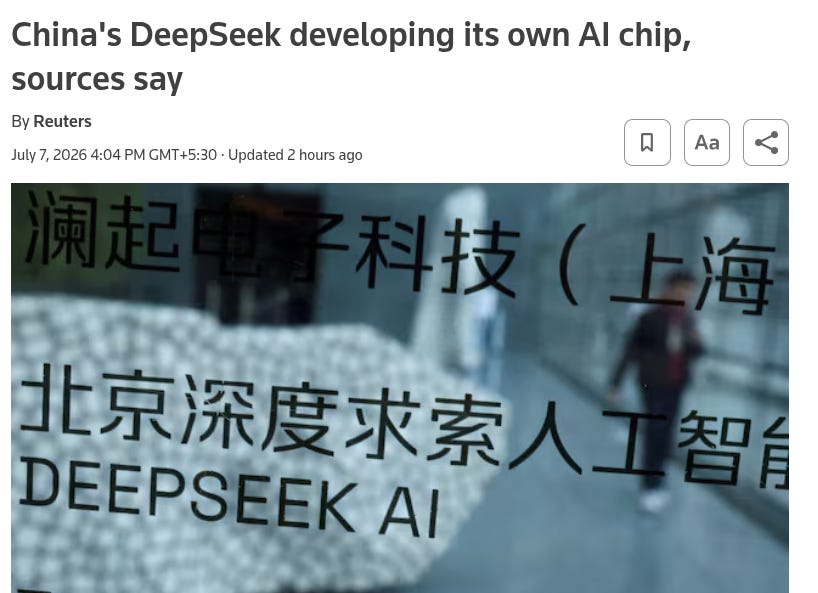
DeepSeek’s chip work is still early, with outside partners and private hiring of chip-design engineers.
The hard part is not drawing a chip, but making it at scale. Advanced foundries and high-bandwidth memory remain chokepoints because U.S. rules restrict Chinese access.
DeepSeek can still gain from a narrower chip built mainly for its own models. A custom inference chip could lower serving costs, reduce power needs, and tighten software-hardware control.
🗞️ Per The Information, Zhipu AI is also (after DeepSeek) exploring a custom ASIC after GLM-5.2 usage reportedly jumped 27x in one week.
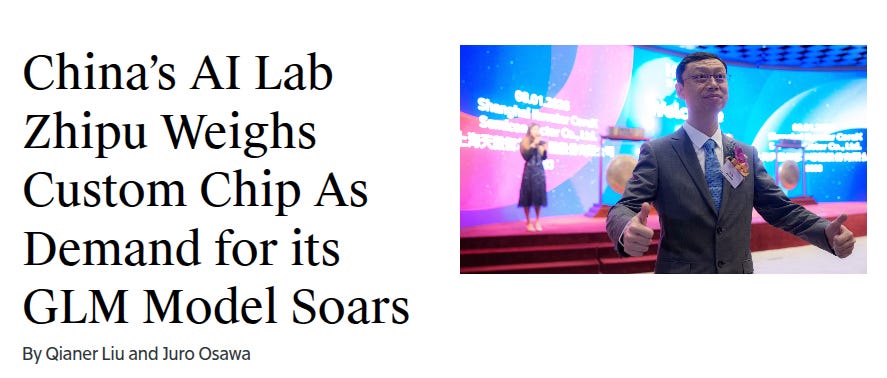
A custom ASIC removes flexibility, but it can cut power draw and per-token cost.
Nvidia GPUs are strong general-purpose machines, but inference at scale has different economics. A fixed model can run better on silicon designed around its own repeated operations.
Zhipu has not chosen a partner, and the project may take more than 2 years. The pattern is now bigger than one Chinese lab or one model launch. Chinese AI companies are trying to make software, hardware, and deployment less separable.
🗞️ Google Gemini just gave developers much stronger tools for production AI agents.
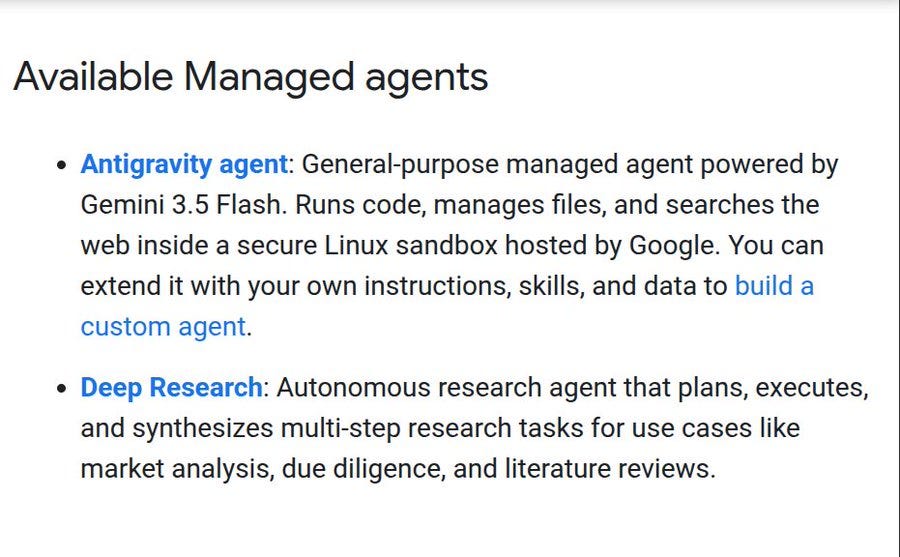
i.e. Gemini API Managed Agents now are much closer to production with new addition of background tasks, remote MCP, function calls, credential refresh, and free-tier access. Managed Agents are Google-hosted AI workers that run antigravity-preview-05-2026 inside an isolated Linux sandbox.
Older agent apps often broke when a long task outlived a normal HTTP request. An "Interaction" is the important object here. It stores the task, the model’s steps, tool calls, tool results, and final output.
So instead of your app manually tracking every turn, tool result, and file, Google tracks much of that server-side. Remote MCP support changes the tool story, because agents can contact private services without custom proxy glue.
A company can now connect observability, databases, or internal APIs beside Google Search and code execution. Function calling adds another split, where Google runs sandbox tools and your app handles business logic.
Credential refresh fixes a production pain, since short-lived tokens can rotate without losing sandbox state. Overall, this makes Gemini API feel less like a model endpoint and more like agent infrastructure.
🗞️ Somebody built a Claude Code workflow that connects your profile, job posts, and application drafts. 5.7K+ Github stars.
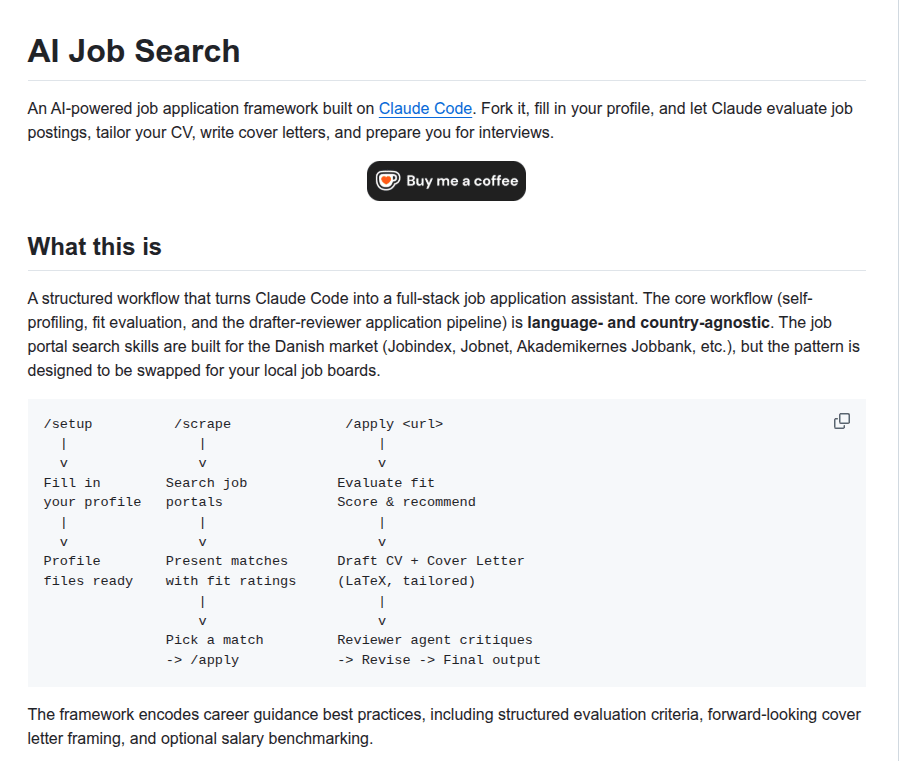
a repeatable job-application machine with saved instructions, profile files, scraper tools, LaTeX templates, and review steps.
You first run /setup, which builds a detailed profile from your CV, documents, or interview answers. Then /scrape searches job boards, removes duplicates, and ranks jobs by fit against your profile.
Then /apply <url> reads a job post, compares it with your real experience, and creates a tailored CV and cover letter.
It loops after drafting: one Claude agent writes, another reviews the draft, then the first revises it.
It also compiles the CV and cover letter as PDFs, checks layout problems, and fixes them until the output is clean.
🗞️During a Bloomberg interview, Yann LeCun (ylecun) explains why LLMs are limited in terms of real-world intelligence during a Bloomberg interview.
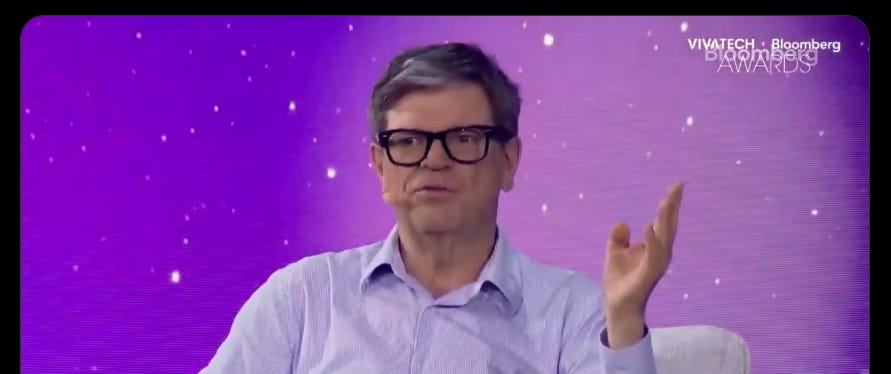
"Language is a very approximate, reduced, quantized, and simplified description of the world, and LLMs can only deal with discrete sequences of symbols. The world is much more complicated than language.
The biggest LLMs are pre-trained on the totality of all the publicly available text on the internet. That’s about 20 trillion words, or 30 trillion tokens. A token is about 3 bytes. So total 10¹⁴ bytes of text.
This is the amount of data a four-year-old has seen through vision during four years. Now, the text, though, would take 400,000 years to read?
So, there is enormously more data from sensory input, like vision, touch, and everything else, than there could ever be through language." A child does not need 400,000 years of reading to understand cups, doors, balance, faces, falls, or heat, because the body is already collecting dense feedback from vision, touch, motion, and consequence.
Text strips most of that away. It turns a living scene into symbols, then asks the model to infer the missing world from traces left by people describing it.
That is why an LLM can sound fluent about physics and still have no native sense of how fragile glass feels in a hand.
Moravec’s paradox names this reversal: the things humans find intellectual can be easier for machines than the things toddlers do without applause.
The hard part is not producing an answer, but building a model of the world that survives contact with weight, friction, surprise, and failure.
🗞️ 1X Technologies is preparing to reveal a robotic hand that may surpass human finger control.
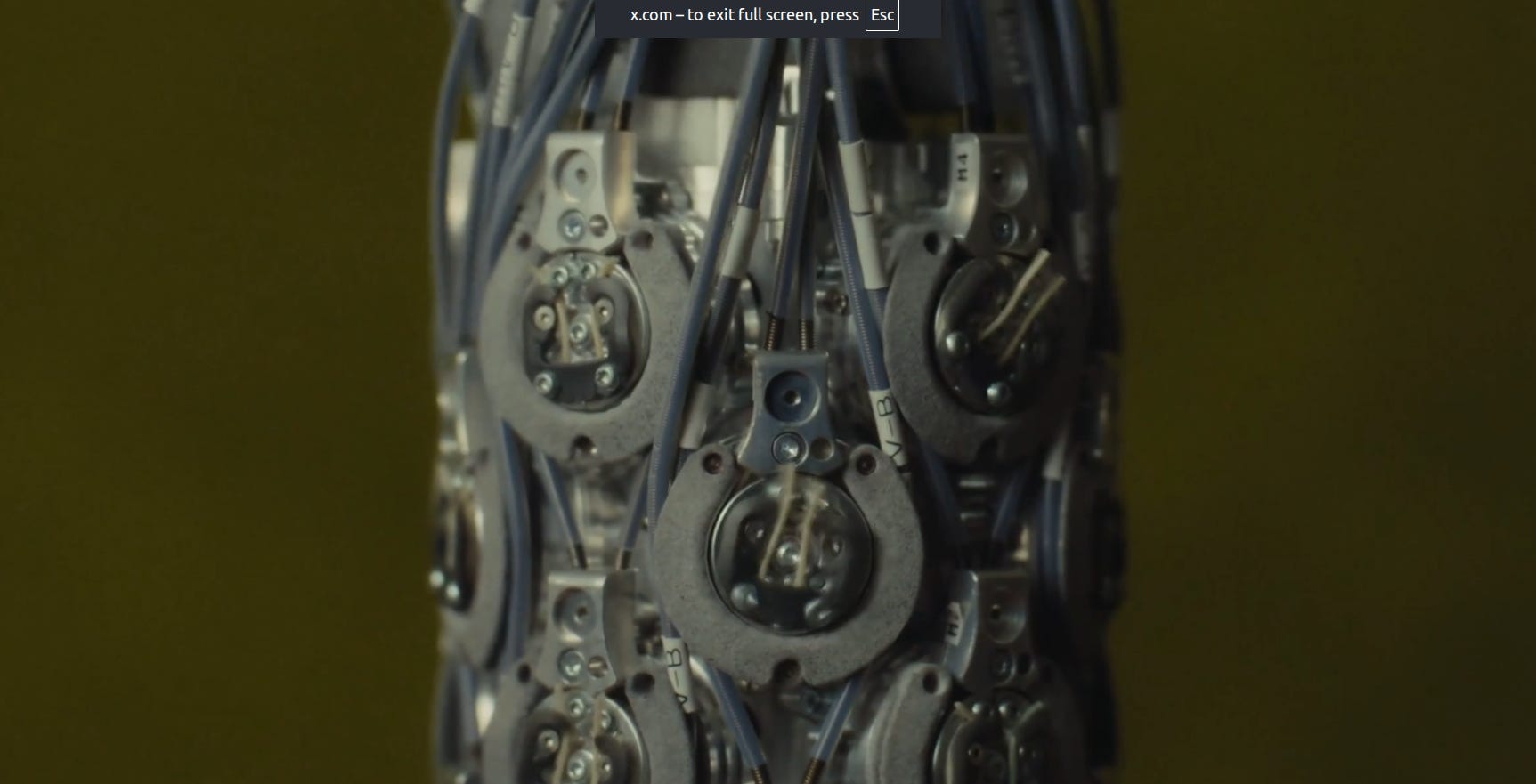
Both Elon Musk and Demis Hassabis has said robotics is bottlenecked by hands and robots will not become useful until hands improve massively.
And now 1X Technologies is unveiling the most advanced robotic hand in human history.
The big deal here is the controllable force across the small joints that make dexterity possible. A 10-20DoF hand would sit near the hard boundary between compact hardware and humanlike control.
The design appears built around Bowden tubes, which route force through cable-like tendon paths. Real intelligence may be hiding in the routing, not the fingers.
That architecture lets actuators sit away from the fingers, keeping the hand lighter.
A human hand uses the same broad trick, with muscles pulling tendons across joints.
1X is applying that idea to humanoid robotics, where compact hands must handle real objects. The visible side reportedly shows 20 tendons, suggesting 10 paired actuator paths.
A matching hidden side could raise the system to 40 tendons and 20 actuators. The lower estimate points to coupled finger joints, where one tendon path drives several links.
The higher estimate points to independent IP control, where each finger segment can move separately. That difference separates a strong gripper from a hand that can shape contact precisely.
The catch is calibration, because tendon friction, stretch, and backlash can erase beautiful mechanics. If 1X has solved that reliably, the hand could become a serious advantage for NEO.
That’s a wrap for today, see you all tomorrow.