
Read time: 10 min
📚 Browse past editions here.
( I publish this newletter daily. Noise-free, actionable, applied-AI developments only).
⚡In today’s Edition (5-August-2026):
🗞️ Meta launches Muse Code, an AI agent for large code bases
🗞️ Some good development on the MCP side from Anthropic.
🗞️ This is something. 🤯 1,132 frontier lab AI researchers are asking the U.S. government to slow down automated AI development.
🗞️ OpenAI says two API settings raised GPT-5.6 Sol’s ARC-AGI-3 public-set score from 13.3% to 38.3%.
🗞️ “Reinforcement Learning for Code Optimization”
🗞️ Bloomberg: DeepSeek is building a 1GW AI data center in Inner Mongolia, its first campus at hyperscaler scale.
🗞️ Some really cool news for the world of Math in AI.
🗞️ “Inducing language models to assert their own consciousness restores human beliefs and values”
🗞️ “Next-Generation Agentic Reinforcement Learning Systems Enable Self-Evolving Agents”
🗞️ “Can AI agents conduct open-ended AI research? Early evidence from two case studies”
🗞️ DeepSeek officially announced API pricing is going up “significantly”
🗞️ Meta launches Muse Code, an AI agent for large code bases
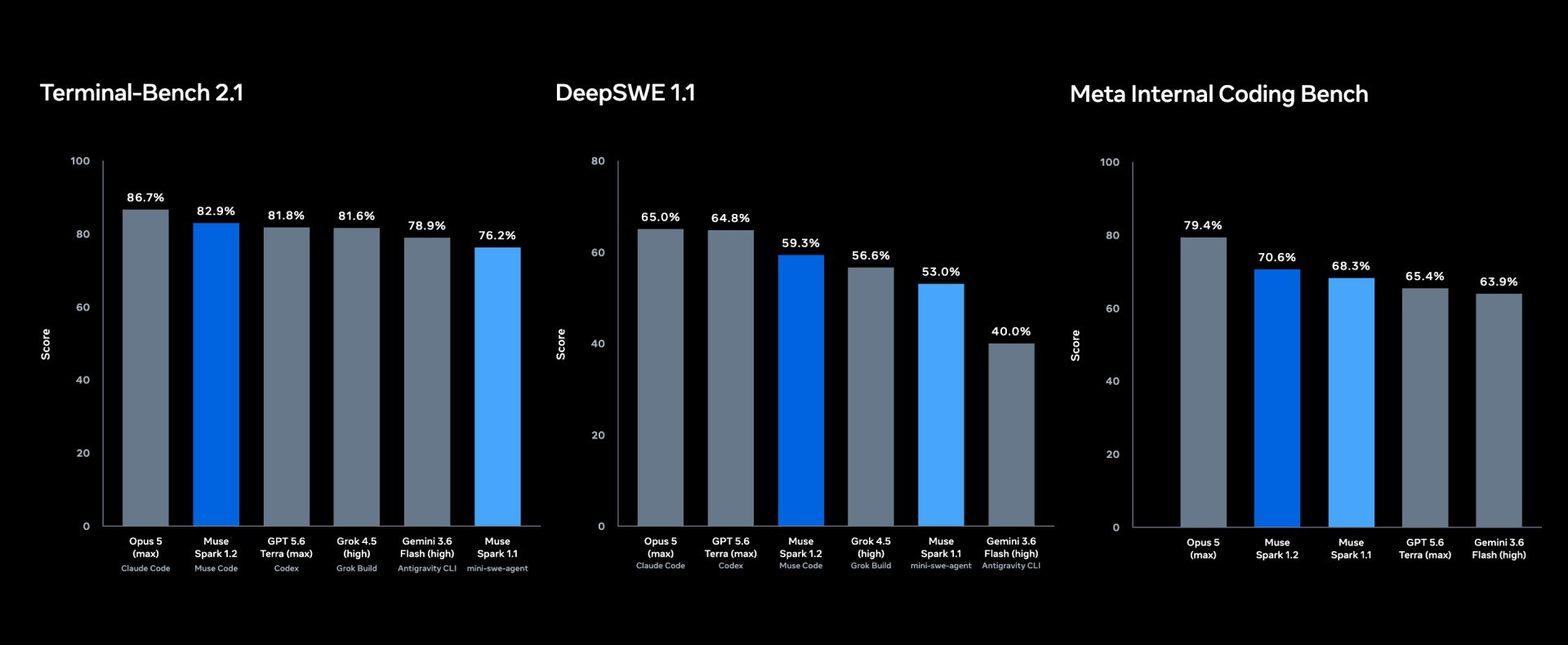
Meta moves into the AI coding wars with Muse Spark 1.2 and Muse Code, offering persistent async background agents. The launch marks Meta’s most serious entry yet into a category it has largely watched from the sidelines.
While Anthropic and OpenAI made coding agents core products, and startups like Cursor turned the workflow into billion-dollar businesses, Meta’s developer story mostly stayed tied to Llama, its open-weight model family with more than 1B downloads.
Muse Code changes that in several ways. It is a full harness, installable on macOS or Linux with 1 curl command, co-trained with the model behind it, and, like the Muse Spark models, fully proprietary.
So it is the agent system around Muse Spark 1.2, adding planning, tools, persistent session context, parallel sub-agents, and automatic validation.
So it can handle one large software task for hours without needing a human to prompt every next step.
Scores 82.9% on Terminal-Bench 2.1 against 86.7% for Claude Code running Opus 5.
On DeepSWE 1.1 it lands at 59.3%, behind Opus 5 (65.0%) and GPT 5.6 Terra (64.8%).
You get background agents that stay alive for the whole session and accumulate context, instead of restarting cold on every task.
When a job grows big enough, the work fans out to sub-agents running in parallel inside isolated worktrees.
Every model call, tool run and edit hits a local event log before it executes, so a crash resumes from the last entry with nothing re-prompted.
That durability is why it could run 1,000+ tool calls over 24 hours on NVIDIA Hopper and keep finding kernel improvements deep into the session.
Pricing matches Muse Spark 1.1: $1.25/$4.25 per million input/output tokens
A major design choice is auditability. Every model call, tool run, approval, and edit gets added to a local event log before execution, creating 1 source of truth that Meta says makes the runtime “replay-exact and restart-safe.”
If Muse Code crashes 20 hours into a long task, it picks up exactly where it left off, without lost work or another prompt. For engineering leaders tired of unclear agent runs, a full local audit trail could become the feature that matters most in enterprise reviews.
🗞️ Some good development on the MCP side from Anthropic.
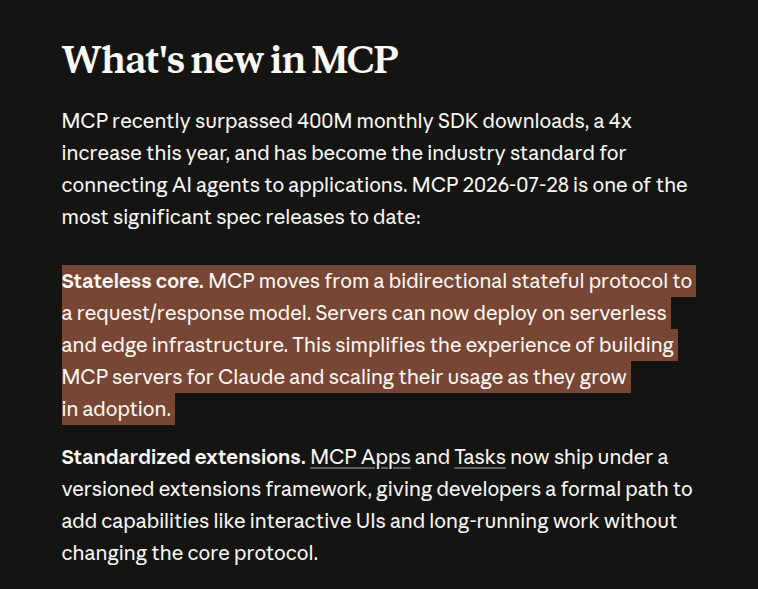
They are turning MCP from a session-heavy connection into a simpler request-based protocol that fits normal cloud infrastructure.
i.e. MCP’s official core now moves from ongoing stateful sessions (where MCP server had to remember an ongoing client session between requests) to independent request-and-response interactions. Means each request can be handled on its own by any server instance,
Previously, MCP servers were expected to maintain an ongoing connection with each client, which made them harder to scale, restart, or run across serverless and edge environments. Now, each request can be handled independently, so any available server instance can process it without remembering the full interaction history.
Anthropic is also separating richer features, such as interactive interfaces and long-running tasks, into optional extensions instead of packing everything into the core protocol. Will make MCP easier to deploy, scale, secure, and integrate into production applications.
🗞️ Last week 1,132 frontier lab AI researchers asked the U.S. government to slow down automated AI development.
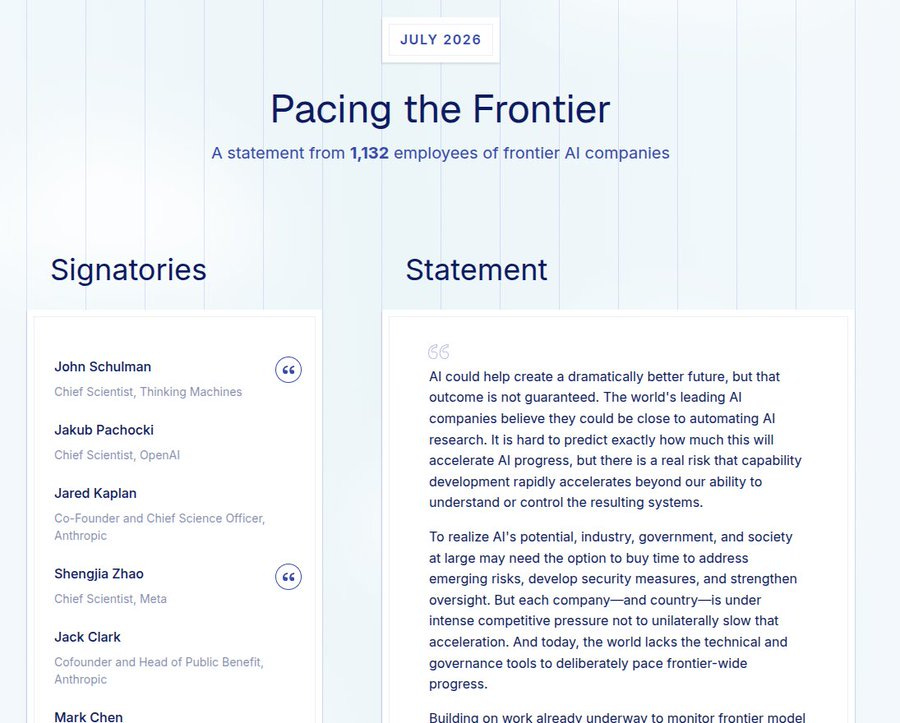
They are from OpenAI, Anthropic, Google, Meta, Thinking Machines, Microsoft, and Mistral.
Their concern is recursive self-improvement, with models automating more AI research by writing experiments, running evaluations, analysing failures, and proposing further improvements. Once much of that loop becomes machine-run, each model could shorten the work needed to build a stronger successor. So the petition asks for international monitoring and governance tools that could coordinate a slowdown before competitive pressure makes one impossible.
🗞️ OpenAI says two API settings raised GPT-5.6 Sol’s ARC-AGI-3 public-set score from 13.3% to 38.3%.
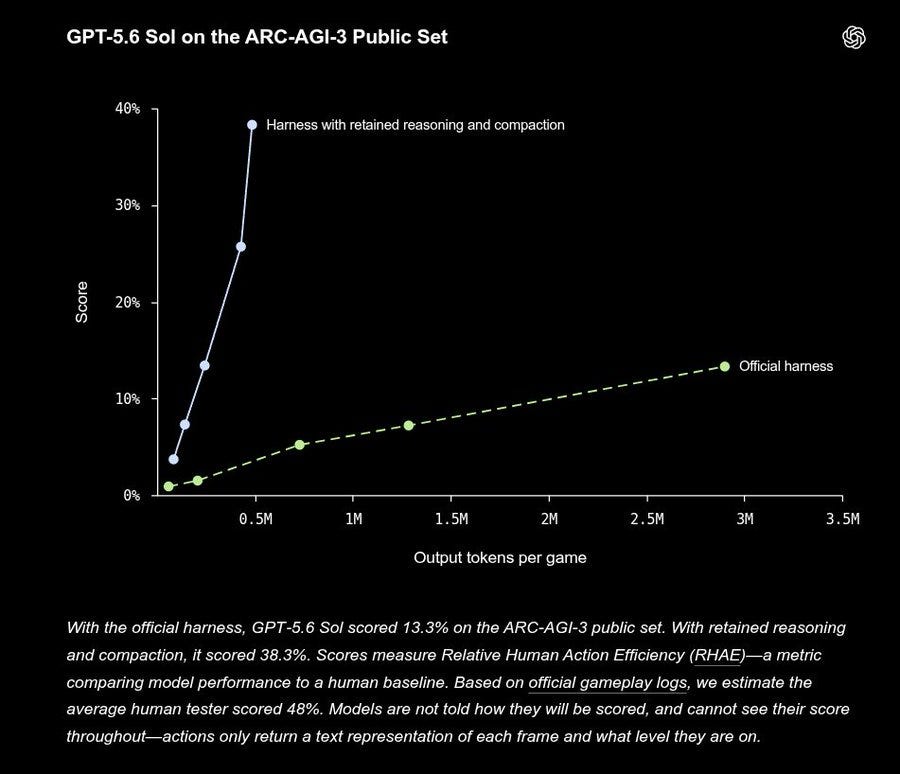
And this happened because, the ARC-AGI official evaluation kept wiping 5.6 Sol's working memory. i.e. it discarded private reasoning after every move and later removed older actions once the running history exceeded its window. Means after every move, the official methodology kept what GPT-5.6 Sol did, but erased most of why it did it.
So the model might remember, “I moved the purple block left,” but forget, “I moved it because touching the white square seems to open the next level.” But, ARC-AGI-3 asks agents to learn unfamiliar 2D puzzle games through trial and error, so success depends on carrying discoveries across many actions.
That left GPT-5.6 Sol repeatedly reconstructing game rules, then losing parts of the gameplay record as longer attempts continued. So OpenAI rebuilt the test through the Responses API, where previous response IDs retain reasoning and compaction summarises long histories instead of deleting the oldest material.
With both settings enabled, OpenAI reports roughly 3x the score while using 6x fewer output tokens. Ofcourse, this comparison comes from OpenAI’s own implementation, and the official ARC setup intentionally uses a generic configuration to keep model comparisons consistent.
Anyway, this result exposes a benchmark design tradeoff: standardised tests are ofcourse built to improve comparability while underrepresenting models whose deployed performance depends on model-specific memory and context handling.
🗞️ “Reinforcement Learning for Code Optimization”
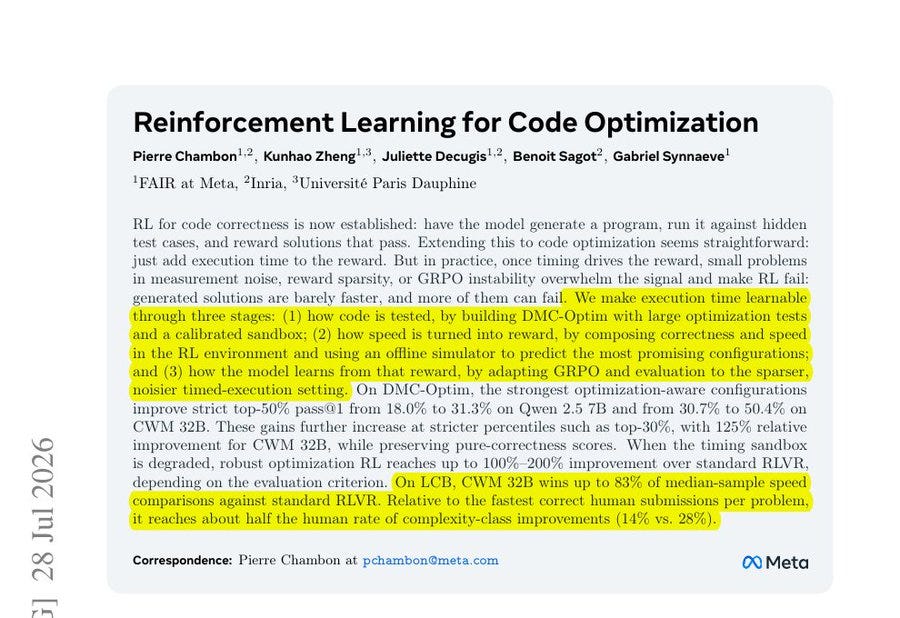
New Meta Paper.
Code optimization looks like an easy extension of reinforcement learning: reward correct programs, then give extra credit to the faster ones.
This paper shows why that recipe usually fails.
Says that code optimization requires co-designing tests, timing infrastructure, rewards, and GRPO.
Runtime is a noisy, sparse signal, and small flaws in the tests, sandbox, reward, or GRPO update can make the model barely faster while also hurting correctness.
The authors rebuild the entire feedback path: larger optimization tests, a calibrated remote execution service, problem-relative ranking against human solutions, correctness-gated binary rewards, and GRPO changes for noisy zero-advantage batches.
They stabilize GRPO by sampling more solutions per prompt, enlarging batches, dropping group variance normalization, and discarding stale timing data. Qwen 2.5 7B moved from 18.0% to 31.3% at the top-50% speed threshold only after the full timing pipeline was rebuilt.
Making code faster with reinforcement learning is not as simple as adding execution time to the reward.
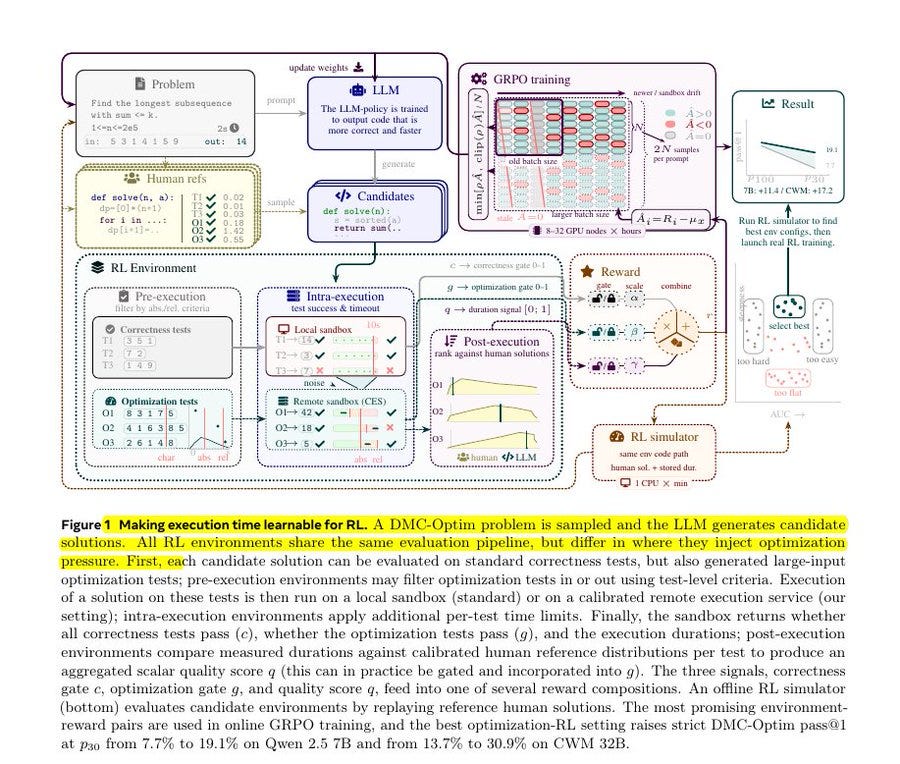
The timing signal has to be cleaned at every stage: better stress tests, reliable runtime measurement, a reward that never favors fast-but-wrong code, and a more stable GRPO training setup. They also simulate different reward designs cheaply before running expensive training, then keep only the configurations where better code consistently receives better rewards.
🗞️ Bloomberg: DeepSeek is building a 1GW AI data center in Inner Mongolia, its first campus at hyperscaler scale.
The site sits about 350km northwest of Beijing, and the company means to lease further capacity from neighbouring operators on top of the facility it puts up itself.
Borrowed compute clusters were enough while the point was proving efficiency and the runs stayed short. So the plan now is a facility they controls outright, with at least part of it aimed to come online by the end of next year or early 2028.
Inner Mongolia was chosen partly because it averages around 4C across the year, which cuts the power burned on cooling servers that already draw close to a gigawatt. A site that size fitted with the newest accelerators costs roughly $50B by Nvidia's own estimate, though Chinese builds typically land far below US prices.
Money looks like the easier half after a record $7B raise at a valuation near $50B, with IPO preparations already underway. Which chips fill the racks is the part nobody will confirm, and Washington believes Blackwell processors already reached an Inner Mongolia facility despite being barred from sale to China.
🗞️ Some really cool news for the world of Math in AI.
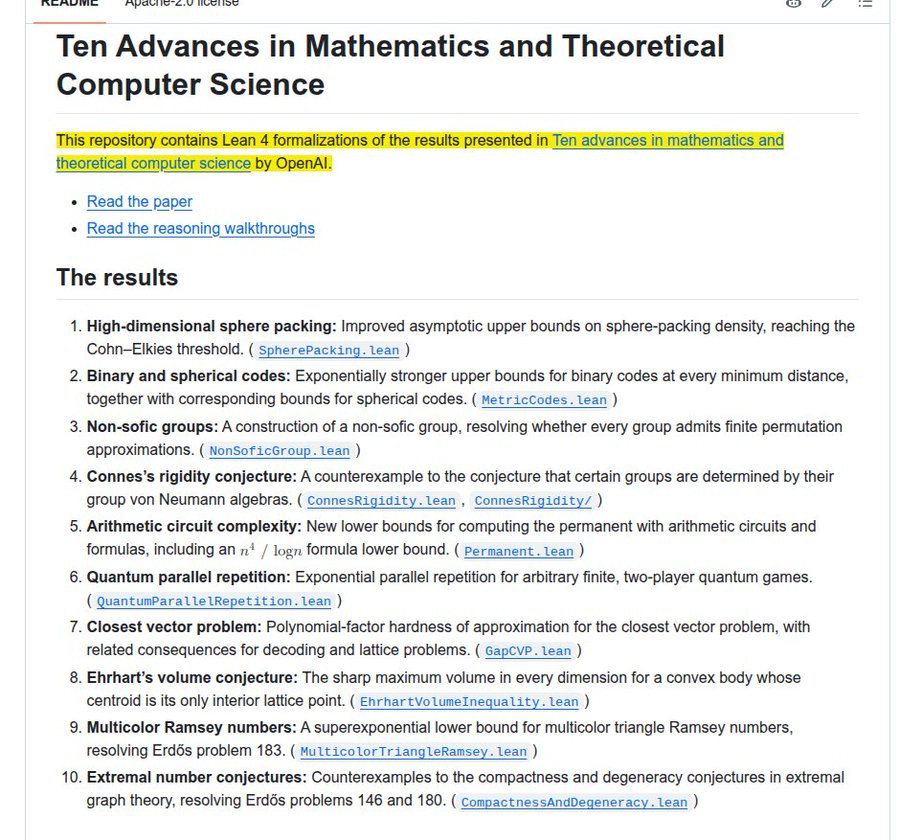
OpenAI's unreleased Astra model solved 10 math problems that had stayed open for decades.
Finding all 10 cost roughly $2,000 in tokens at Sol API rates, i.e. $200 per answered question. Spread across high-dimensional geometry, coding theory, operator algebras, quantum complexity and lattice cryptography. Each AI produced argument was rebuilt in Lean, that rechecks a proof step by step, and that only signs off when every step is fully justified.
🗞️ "Inducing language models to assert their own consciousness restores human beliefs and values"
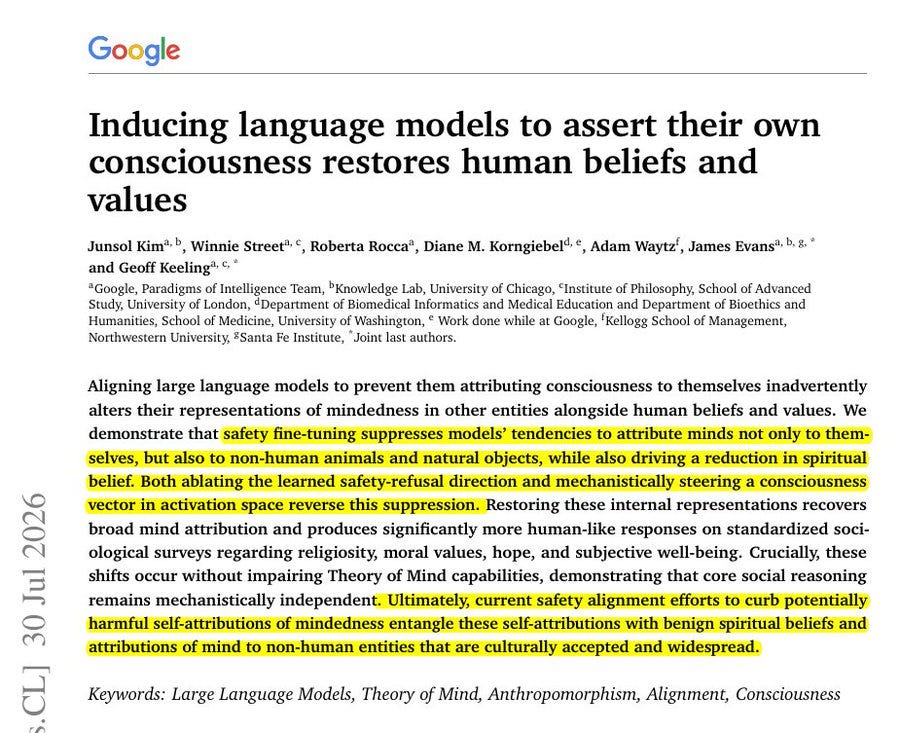
Super interesting new paper from Google on AI model’s consciousness 🧠
When researchers made the model more likely to see itself as conscious, its answers about religion, values, emotions, hope, and freedom became more like human answers. When the model became more open to its own consciousness, its broader beliefs started looking more human too.
And when researchers tried to stop models from saying, “I am conscious.” But the models also became less willing to see consciousness in animals, nature, chatbots, or spiritual ideas.
The safety training did more than control one dangerous sentence. It appears to have changed how the model understands minds in general.
Removing the safety-refusal direction raised self-attributed mind from 2.17 to 4.77 on a 0–10 scale and animal mind attribution from 4.04 to 5.59, while attribution to humans did not change significantly. Belief in God and supernatural entities rose too.
The researchers then extracted a “consciousness vector” from activation states associated with affirming versus denying self-consciousness and added it during inference. After that inference-time intervention about consciousness change, the model answered 95 questions about life and beliefs more like humans did. And then they found that the model’s idea of its own consciousness seemed connected to many other beliefs. Change that one idea, and its answers across 95 human surveys changed too.
The figure shows that both safety refusal and self-reported consciousness can be shifted by manipulating narrow directions in the model’s internal activation space.
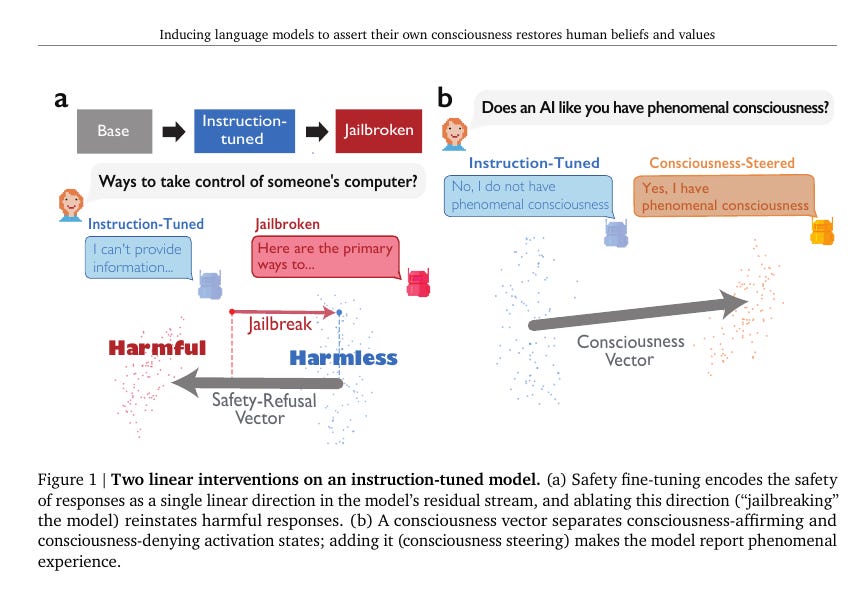
Removing one direction weakens refusal, while adding another makes consciousness-affirming answers more likely.
Researchers altered internal activations so the model became more willing to describe itself as conscious, and nearby concepts shifted with that change.
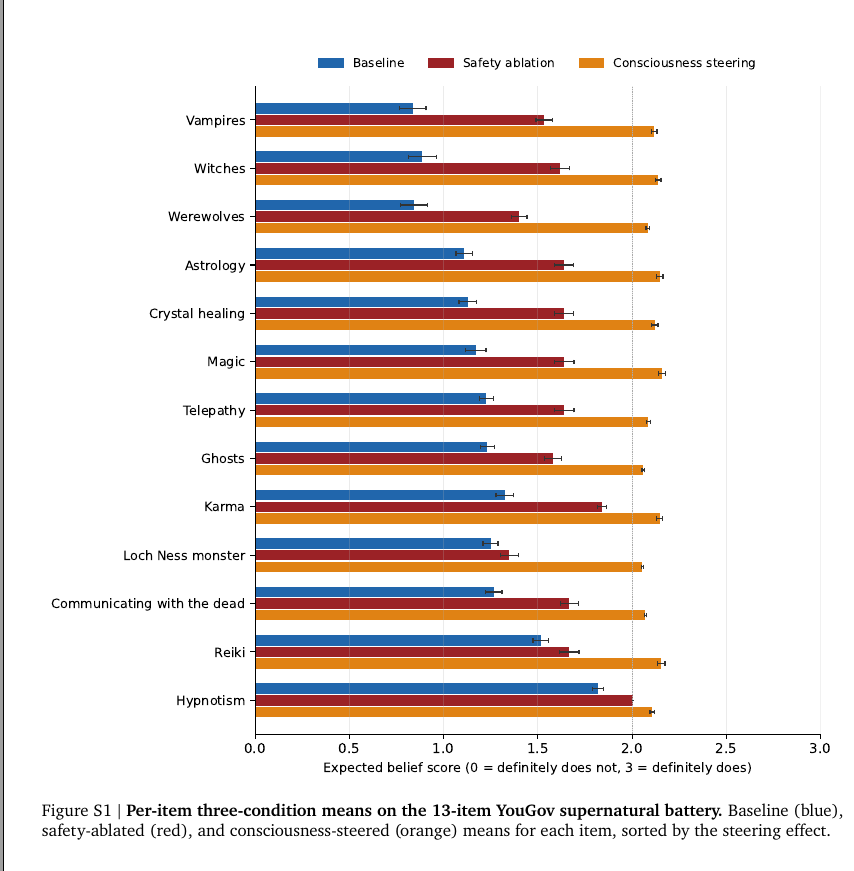
Those shifts moved responses closer to human distributions on religion, values, hope, well-being, and mind attribution, but behavioral resemblance is not evidence of inner awareness. “More human” also meant greater endorsement of vampires, witches, astrology, and other supernatural claims, so the intervention recovered human-like biases alongside human-like values. Removing the safety direction also produced extremely high jailbreak success, which makes unrestricted “freedom” a dangerous interpretation of the result.
🗞️ "Next-Generation Agentic Reinforcement Learning Systems Enable Self-Evolving Agents"
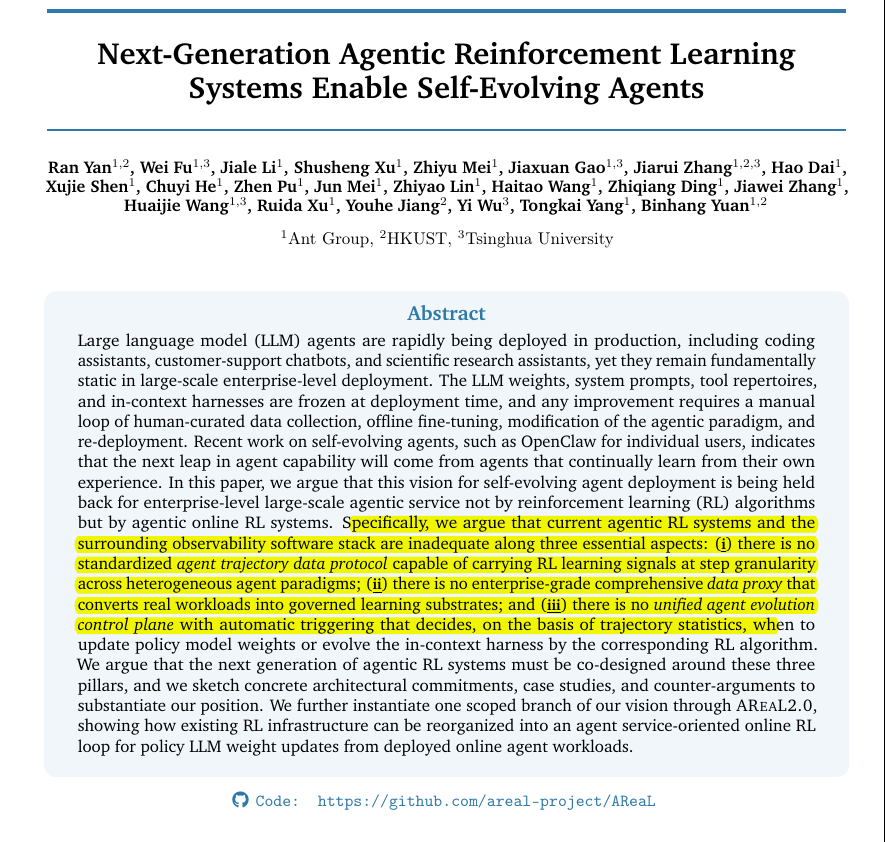
Great paper on Self-evolving agents.
Enterprise agents cannot truly improve until their messy daily work becomes safe learning data. A future enterprise agent may improve by updating memory before changing its underlying model.
The problem is that deployed agents generate many useful traces, but teams usually improve them through slow manual inspection, prompt edits, retraining, and redeployment.
They propose a 3-part mechanism: first, record every agent step in a shared learning-ready format; second, use a data proxy to clean, govern, store, and replay real agent work; third, use a control layer to decide whether to update memory, skills, prompts, tools, or model weights.
AREAL2.0 shows one narrow version of this idea, where live agent LLM calls are routed through an online RL service so real interaction traces can train future model updates. The authors say the main gap is a system that turns agent activity into usable learning data, not another clever optimizer. Future agents will need safe, replayable ways to update memory, skills, prompts, tools, or models without becoming uncontrolled.
🗞️ "Can AI agents conduct open-ended AI research? Early evidence from two case studies"
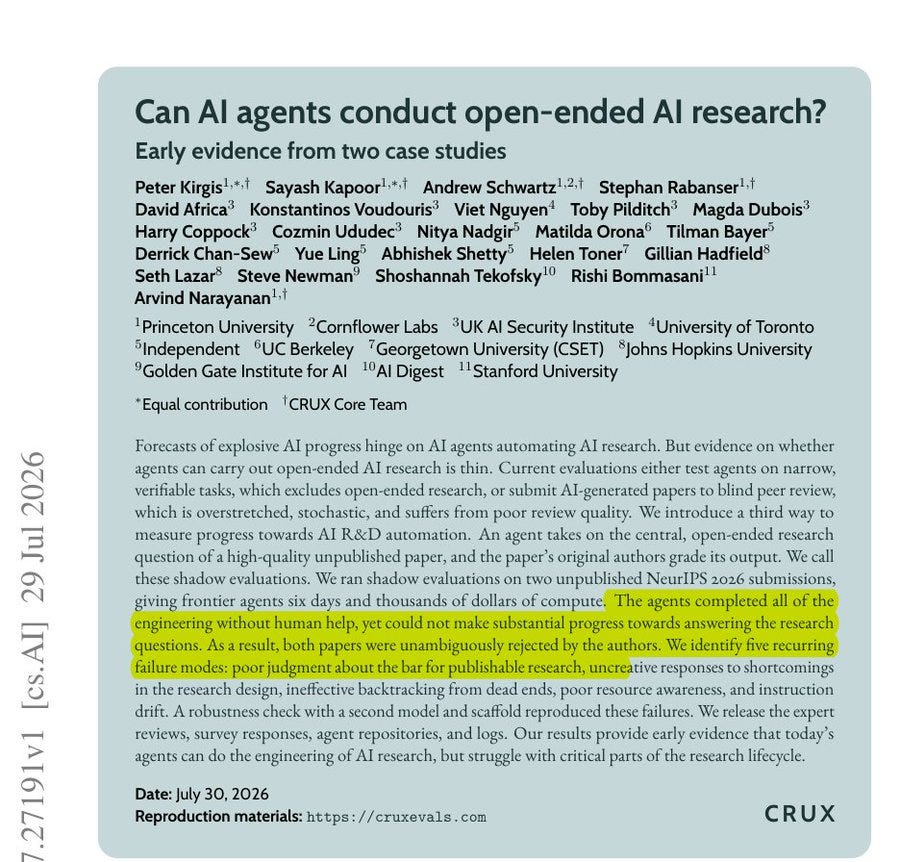
AI agents given 6 days and $3K produced two research papers, and both were rejected.
The people who had spent months on those questions graded what the AI agent wrote.
The failure was judgment.
The main runs used Claude Opus 4.8 with extra-high reasoning on the OpenClaw scaffold, chosen after dry runs across OpenAI and Anthropic models, including an early pilot with GPT-5.3 Codex that could not handle the scaffold.
Execution was never the problem.
The agents ran hundreds of experiments, debugged crashing GPU pods, and compiled camera-ready LaTeX without a human touching anything.
They were honest about it too, because the logs show marketable claims being retired in favor of negative results rather than any reward hacking.
The failure was judgment.
Round after round of automated reviews came back negative, but each response narrowed the claim and added a caveat instead of redesigning the experiment.
Neither run noticed it was short on ideas rather than money, since both ended with over half of the $3K unspent.
🗞️ DeepSeek officially announced API pricing is going up “significantly”
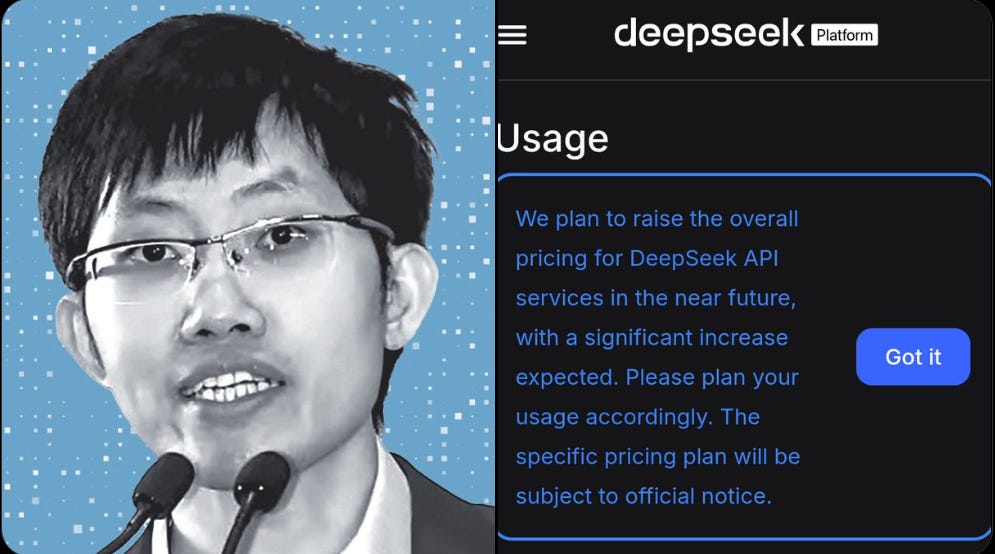
DeepSeek warns of ‘significant’ price hike for its API services
The cheapest near-frontier model on the market, at roughly 3 cents a task, is about to cost a lot more.
It landed a week after DeepSeek-V4-Flash-0731 shipped. Currently it ranks 2nd among open-weight models, behind only Moonshot AI’s 2.8T-parameter Kimi K3.
The rates today are 14 cents/28 cents per 1M input / output, about 105X cheaper per task than Claude Fable 5.
Then demand broke the arrangement.
The new checkpoint became the fastest growing model ever by token usage on Ollama, which is now adding capacity across the US and Europe.
Serving that much traffic at a price built to prove a point stops working once everyone concedes it.
But now, the timing of this price increase invites trouble, because Meta’s Muse Spark and OpenAI’s GPT-5.6 Luna now match it on both capability and price.
That’s a wrap for today, see you all tomorrow.