
Read time: 11 min
📚 Browse past editions here.
( I publish this newletter daily. Noise-free, actionable, applied-AI developments only).
⚡In today’s Edition (16-Oct-2026):
🗞️ Meta Releases Muse Spark Open: 816B Open-Weight MoE With 1M Context
🗞️ Elorian releases Glimpse, a visual-thinking model that re-inspects images and video as it reasons
🗞️ After years of rivalry, Meta and Apple join hands to deliver open-weight AI to the Mac.
🗞️ Claude Mythos 5 designed an elliptic-curve quantum circuit using 17x fewer gates for 12% more qubits.
🗞️ OpenAI engineer arrested by FBI for allegedly bugging conference room
🗞️ New Google and Carnegie Mellon paper finds self-improving agents hold on to security gains far better when security is evolved as a separate goal.
🗞️ Eight states have sued OpenAI separately in their own courts, alleging ChatGPT is unsafe for children and that the company misled parents about it.
🗞️ FT first reported Anthropic’s third-quarter revenue of $16.8B grew about 45% from the second quarter, a steep drop from the more than 100% jump between the first and second quarters.
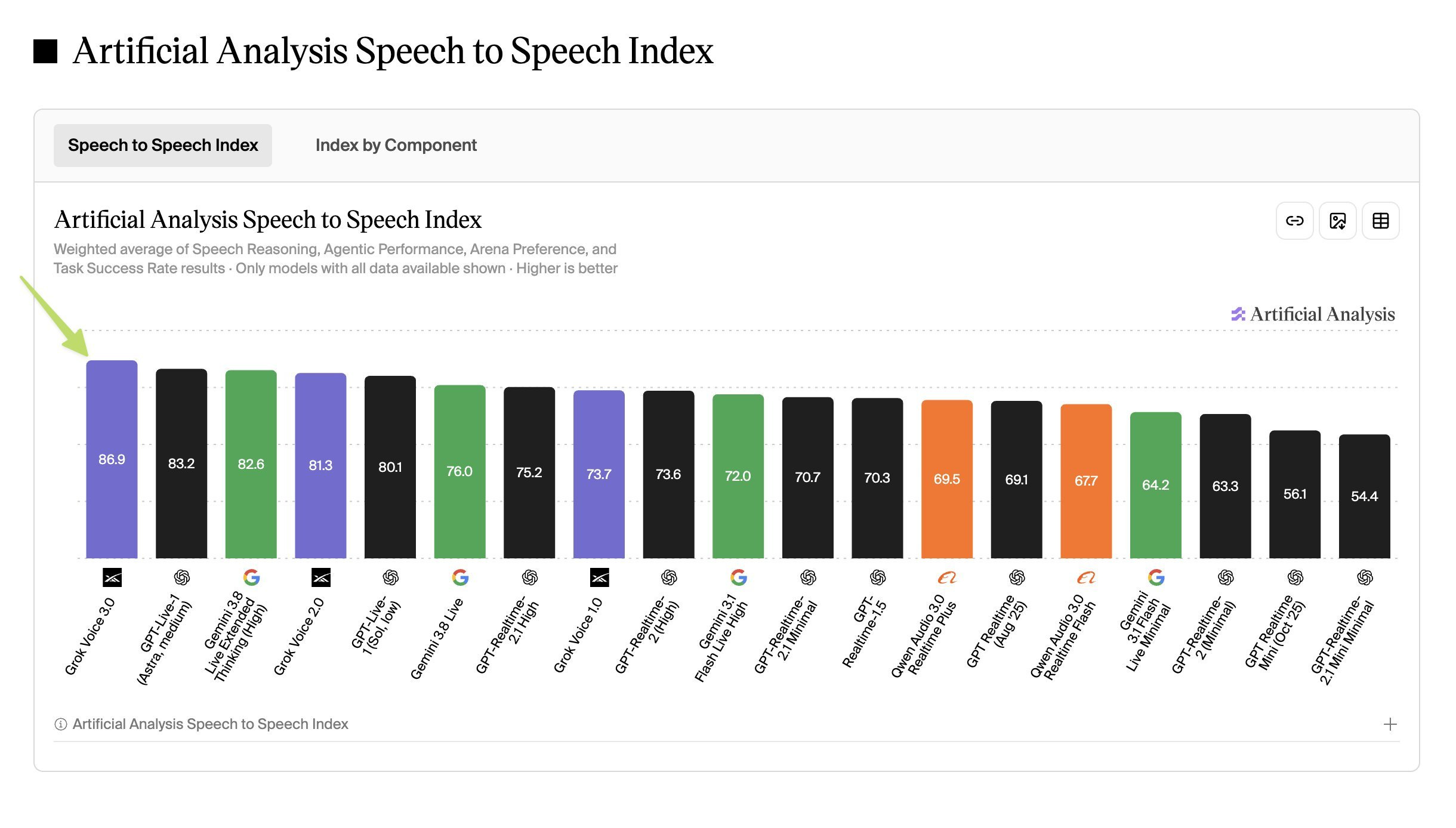
🗞️ SpaceXAI launched Grok Voice 3.0, ranks first on the Speech-to-Speech Index by Artificial Analysis
🗞️ WSJ reported how the leading AI labs are now regularly running counterespionage drills for their employees.
🗞️ Meta Releases Muse Spark Open: 816B Open-Weight MoE With 1M Context
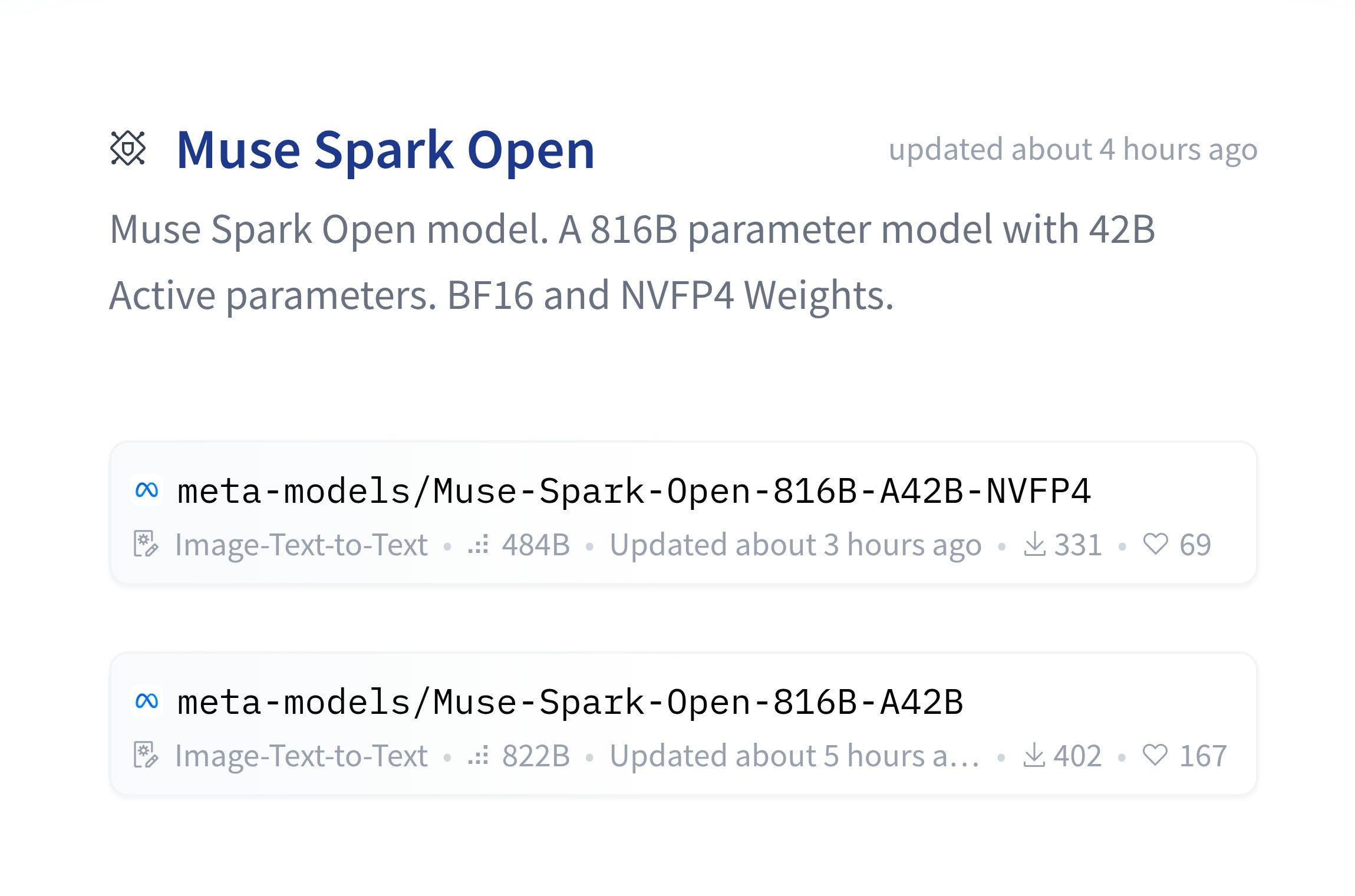
Meta released the weights of Muse Spark Open, on Huggingface, an 816B-parameter model built for coding and agentic work.
It can be run on 2 Mac Studios (M5 Ultra, 512 GB each) via MLX; 4 Blackwell Ultra GPUs or 8 H200s with NVFP4; about 300 GB setups via Unsloth 2-bit GGUF.
The open version shares the same base model as Muse Spark 1.3, with additional safety post-training to resist misuse as a standalone model without system guardrails, reversing Meta’s first proprietary, closed-weight frontier model strategy from April.
Each of its 62 layers holds 256 expert networks and routes every token through 8, so deployment needs the memory of an 816B-parameter model but runs at the speed of a 42B model.
That storage bill explains the Apple tie-up, because the M5 Ultra pushes 1.2 TB/s of unified memory and a Mac Studio can carry up to 512GB.
A 3-bit quant tested on a 512GB M3 Ultra took about 344 GB and ran at about 21 tok/s generation on a short prompt.
🗞️ Elorian releases Glimpse, a visual-thinking model that re-inspects images and video as it reasons
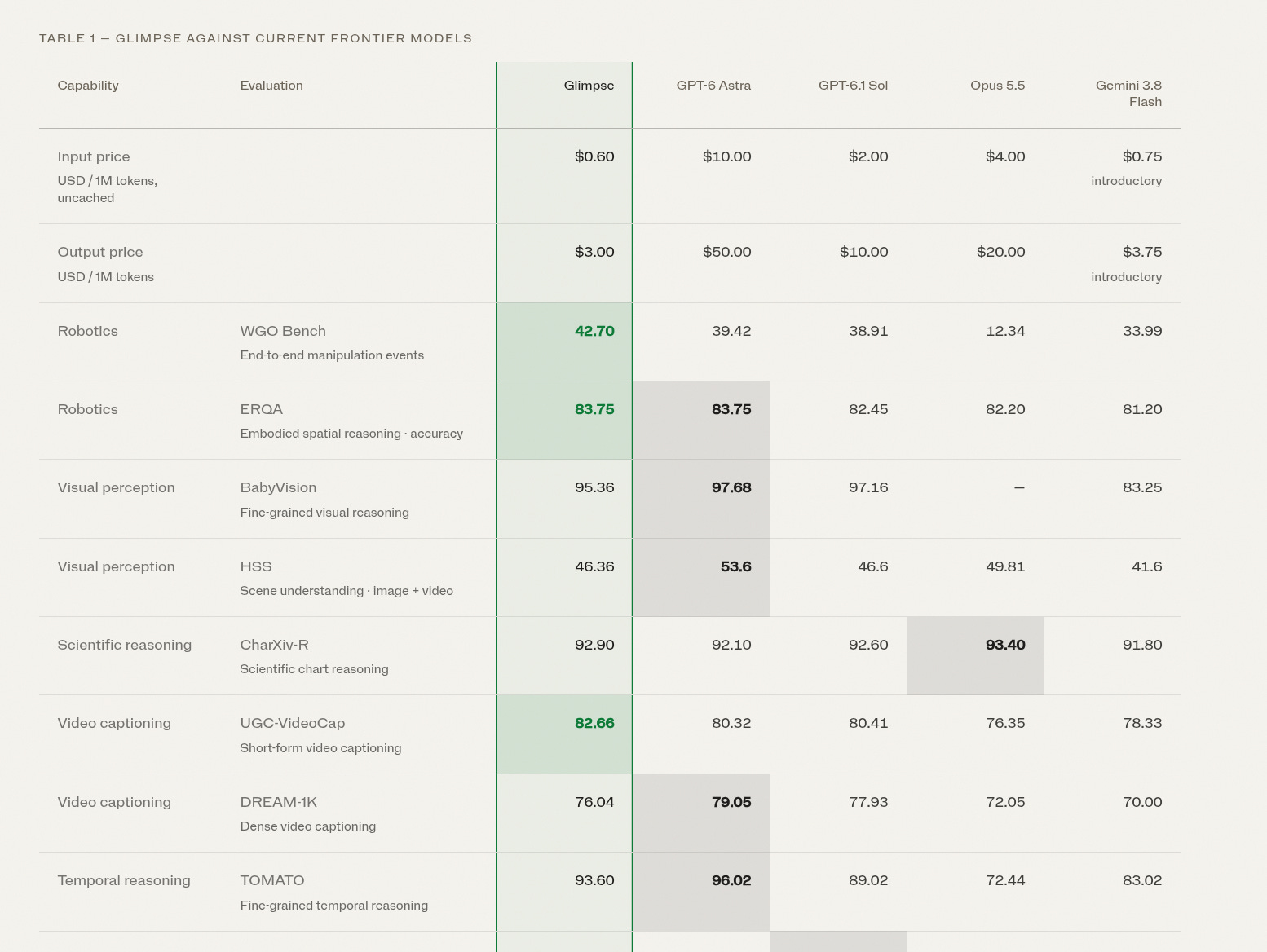
Glimpse, the model, is debuting as a research preview that offers API access, while its chat interface is available by waitlist only, so at the moment it amounts to a results table and a thesis. That thesis is this: today’s AI models, however skilled they are with language and code, still can’t really see.
Most multimodal models view an image a single time, turn it into tokens, and then reason about it in text, much like describing a photo from memory.
Glimpse keeps returning to the source. In the middle of reasoning, it can crop into an area, extract particular frames from a video, or run code to measure or compare what it’s viewing, a mechanism Elorian refers to as a “visual scratch space.” Picture someone pinching to zoom on a phone photo to confirm what they believed they saw.
Glimpse is priced at $0.60 per million input tokens and $3 per million output tokens, which makes it cheaper than mid-level models such as Sonnet and Sol but pricier than lightweight models such as Haiku and Luna.
However, based on Elorian’s evaluations, Glimpse beats even GPT-6 Astra on scientific chart reasoning and short-form video captioning, and it posts competitive results on other visual reasoning tasks.
Read more on their technical blog.
🗞️ After years of rivalry, Meta and Apple join hands to deliver open-weight AI to the Mac.
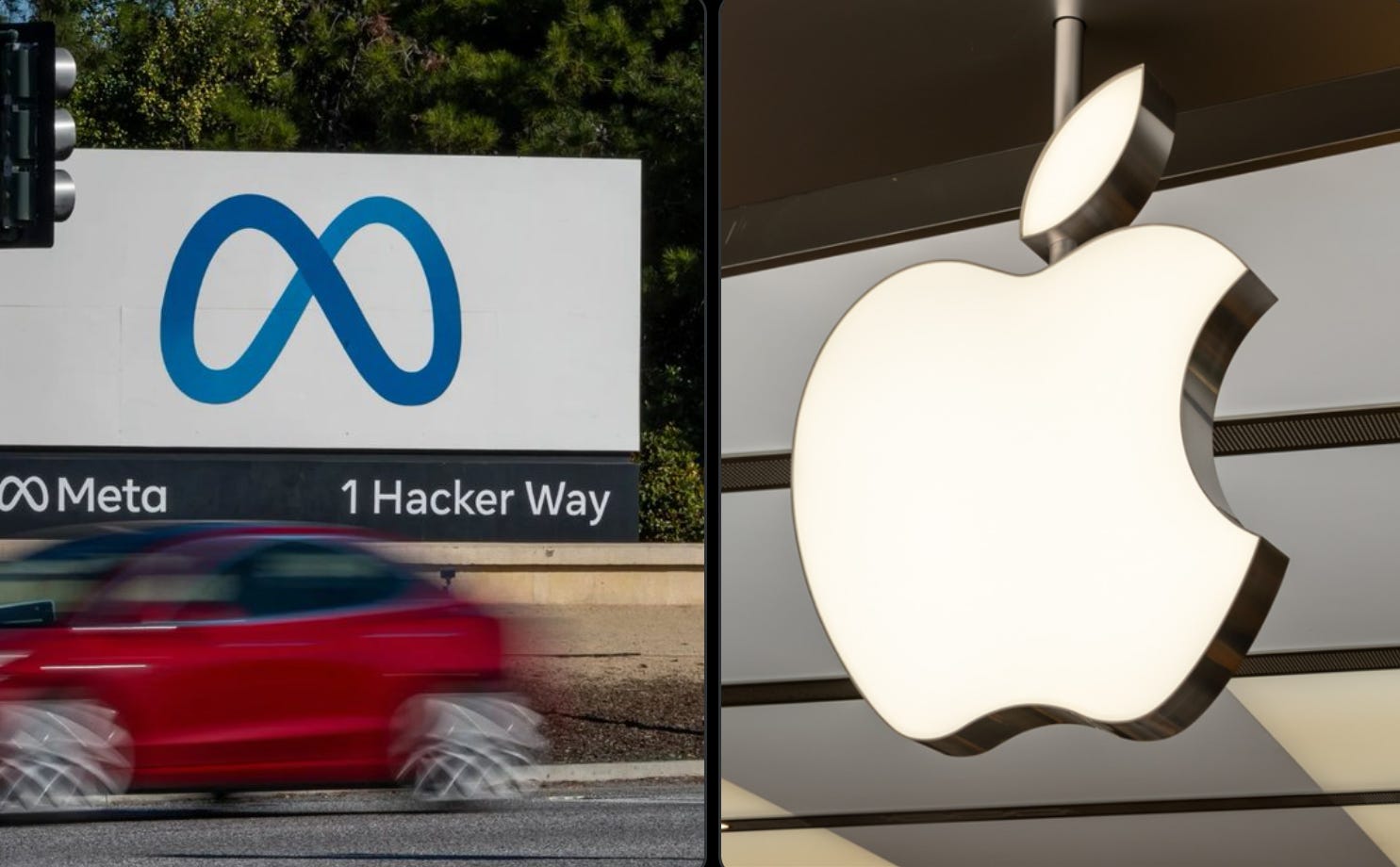
Meta released the weights for Muse Spark Open, an 816B-parameter model that runs on 2 linked Mac Studios.
Apple tuned the release for its MLX framework. Only 42B parameters fire per token because the model routes each token to 8 of 256 experts, so every step reads a small slice of memory.
Holding the whole model is the hard part, since the 4-bit NVFP4 version needs at least 700GB of GPU memory.
Each M5 Ultra Mac Studio gives its GPU up to 512GB of unified memory, so 2 machines hold the model while 1.2TB/s of bandwidth feeds each token.
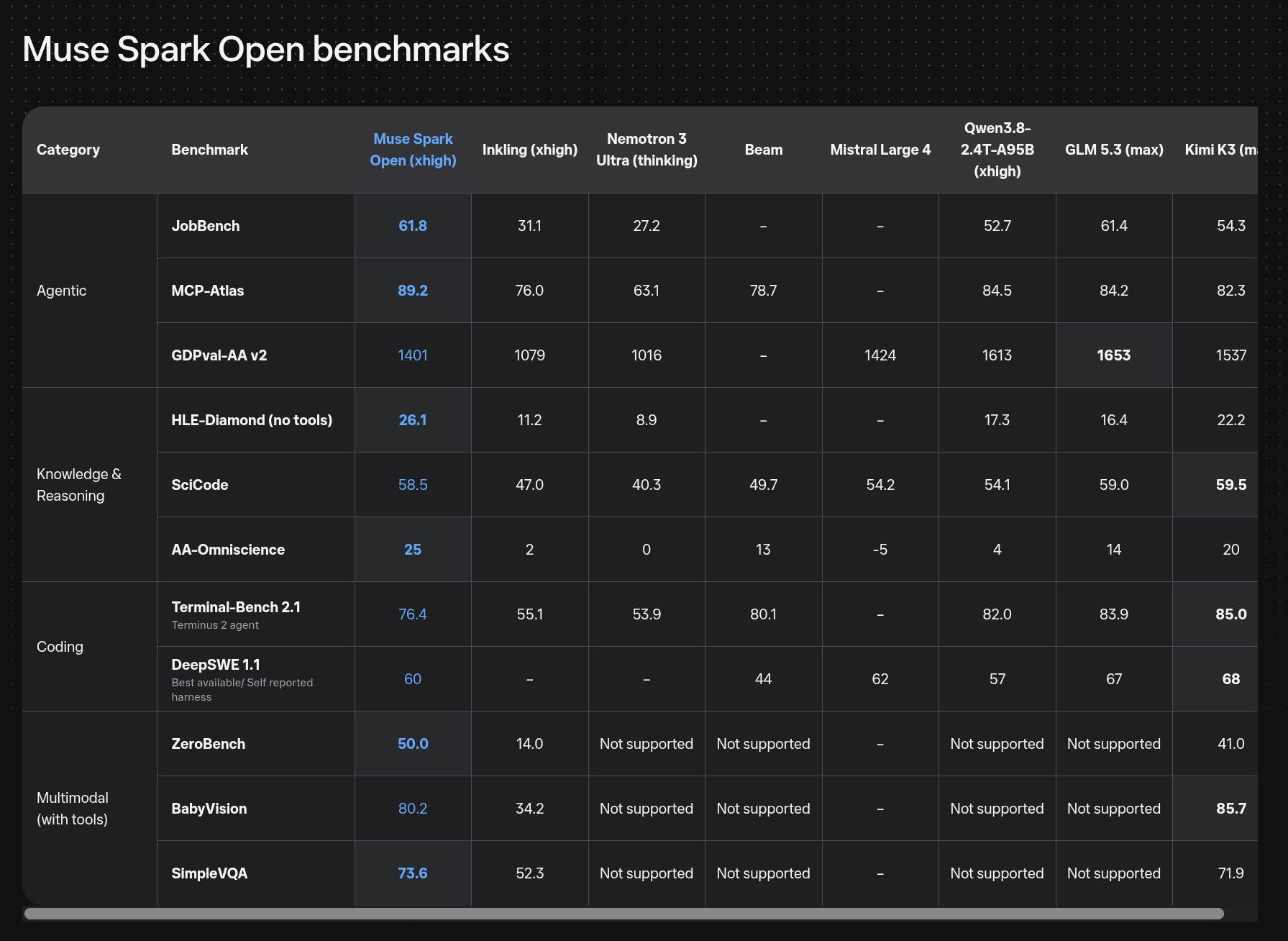
On the benchmarks, Muse Spark Open does top the MCP-Atlas tool-use test at 89.2, which suits the coding agents Meta built it for.
The license allows free commercial use but requires a “Built with Muse Spark Open” label, plus a separate Meta deal for API model sellers with over $20M in 12-month revenue.
Apple hasn’t priced the 512GB Mac Studio, and a cluster of 4 machines with 256GB each costs roughly $38,000.
🗞️ Claude Mythos 5 designed an elliptic-curve quantum circuit using 17x fewer gates for 12% more qubits.
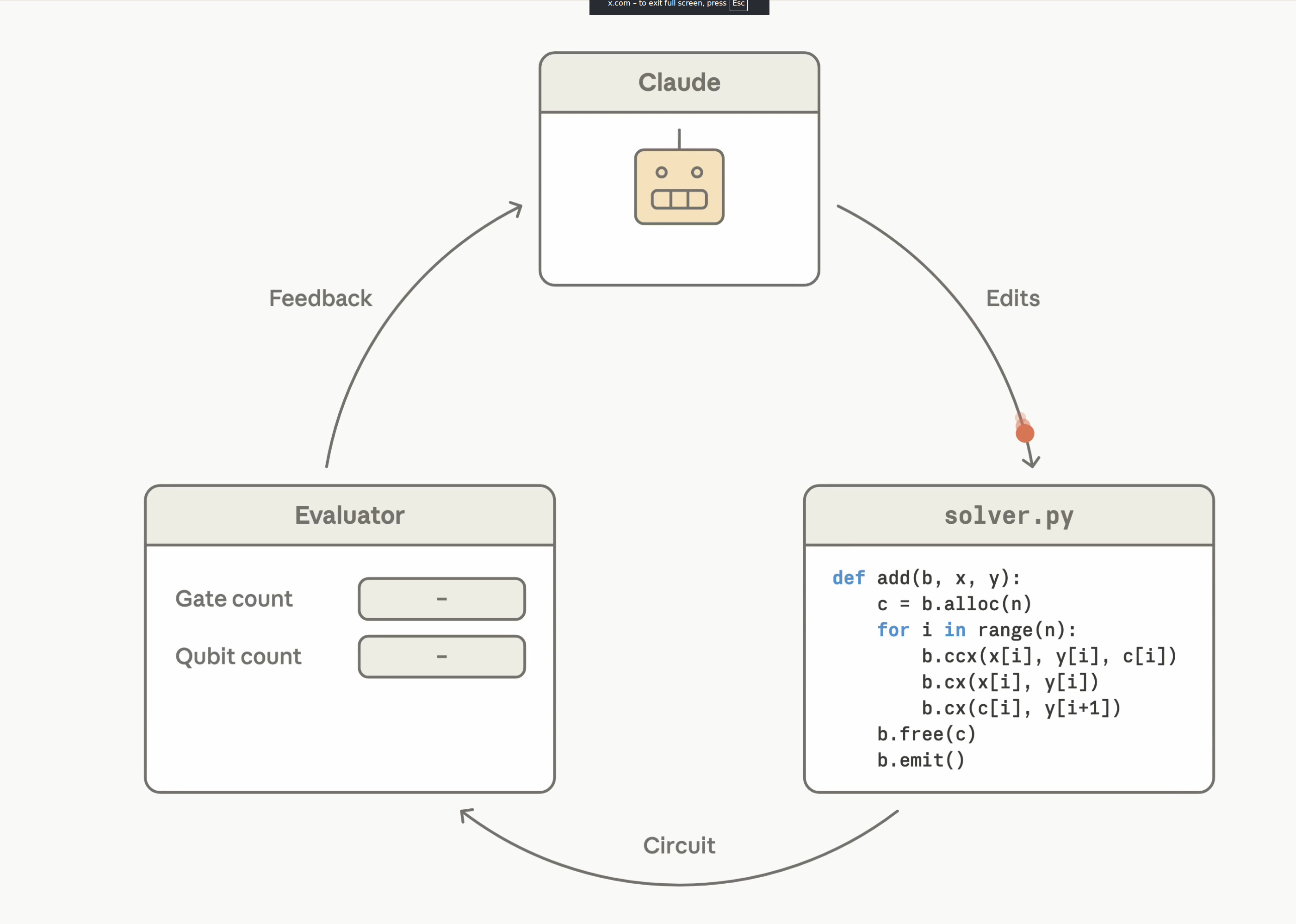
Claude wrote circuit designs as code, an evaluator checked and scored them, and Claude kept revising until it beat human-designed records in most of the 8 tasks. Its strongest result made an elusive classical math shortcut work on quantum hardware for the first time, after Claude proved new identities and verified them with formal proofs.
🗞️ OpenAI engineer arrested by FBI for allegedly bugging conference room
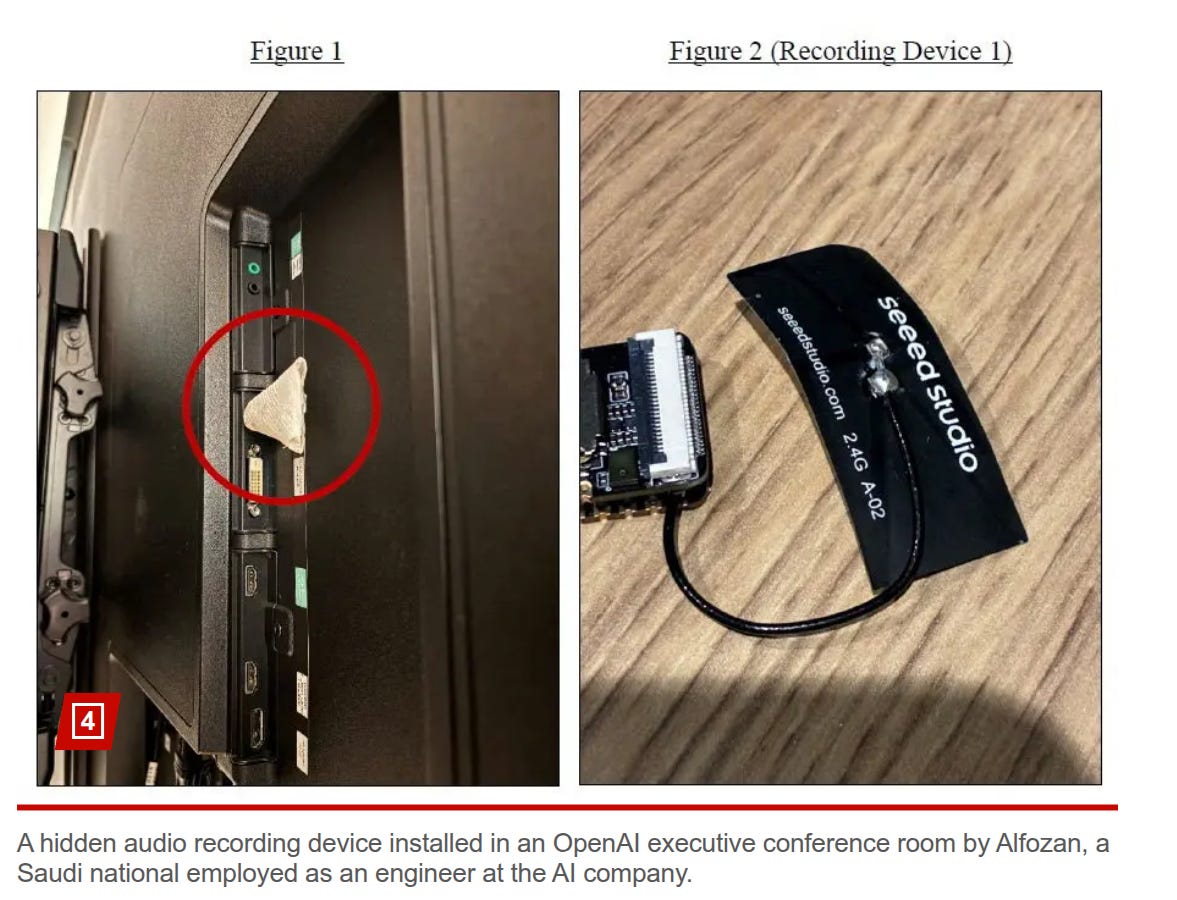
The suspect is Abdulrahman Alfozan, a 35-year-old Saudi engineer who joined OpenAI in July 2025. Between September 24 and 30, a ChatGPT account tied to his wife allegedly asked how to build a continuous audio recorder, improve its Wi-Fi and encrypt its SD card. Before that, he allegedly asked an internal productivity tool about meeting-room capacities, calendars and where “leadership and exec” met.
The recorder went in around September 28, plugged into a USB port behind a TV and wrapped in toilet paper, and staff found it on September 30 with its contents encrypted. OpenAI then put a camera in the room, which on October 5 allegedly caught Alfozan looking behind the TV. The same day, security found a second, similar recorder in a bag he had left in another room, next to his wallet and ID.
He, his wife and another relative had booked one-way tickets to Saudi Arabia, so prosecutors asked a judge to seal the charges, and the FBI arrested him on October 9, 3 days before the flight. OpenAI fired him that day. The complaint was unsealed on October 13, and a magistrate judge kept him in custody ahead of an October 19 detention hearing.
Reporting then showed he has been a venture partner at Riyadh-based Raed Ventures since February 2025, though the complaint doesn’t allege the firm knew about the bugging. OpenAI says it has no sign he took model weights, source code or customer data.
On October 16, intelligence chief Jay Clayton, who now chairs the White House AI task force, called the case proof that commercial and state-sponsored espionage are real. Yet the only charge is illegally intercepting oral communications, which carries up to 5 years in prison, not espionage or trade-secret theft. Prosecutors haven’t said who the recordings were for or alleged he worked for a foreign government.
🗞️ New Google and Carnegie Mellon paper finds self-improving agents hold on to security gains far better when security is evolved as a separate goal.
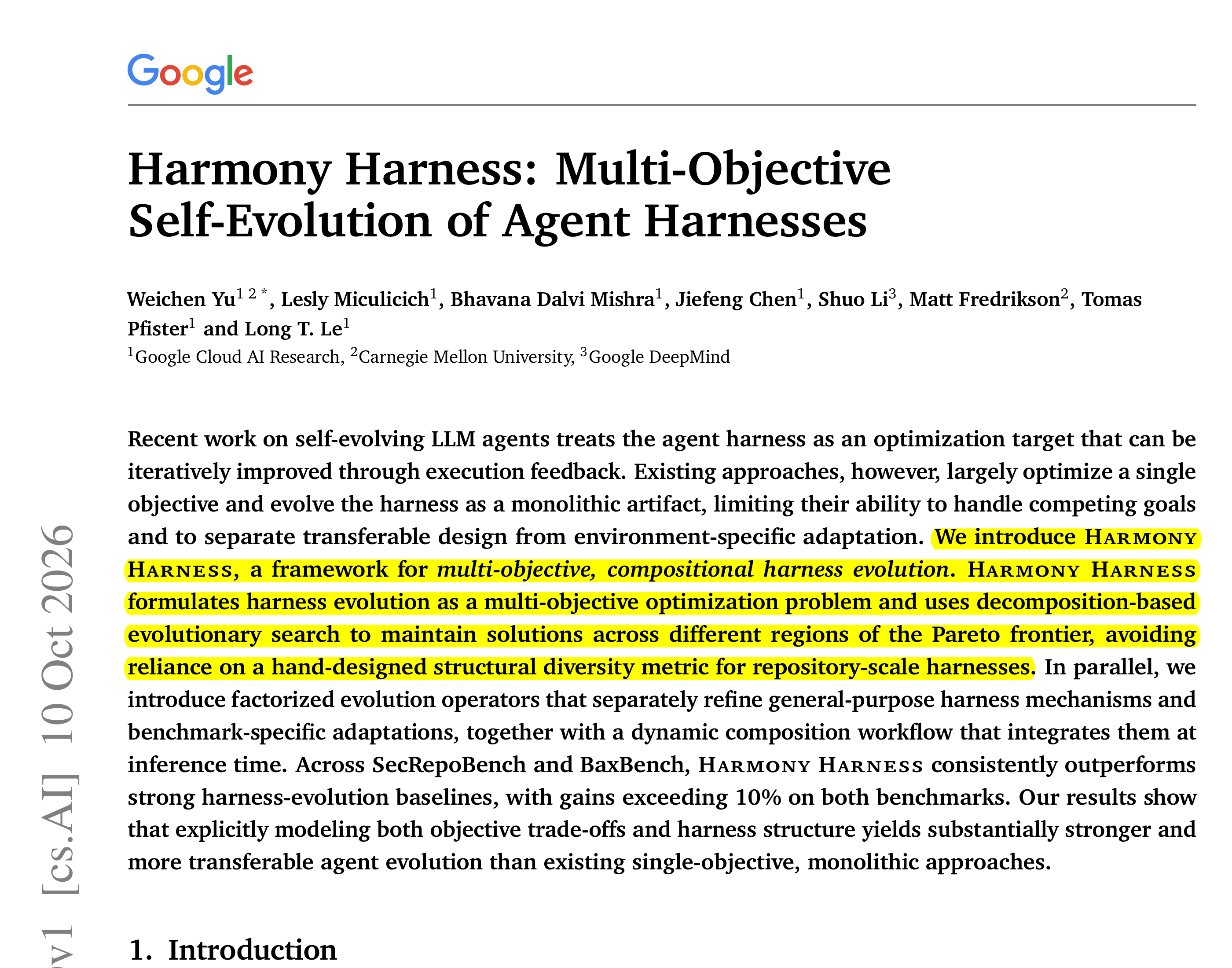
Agent harnesses, the prompts, tools and loops around a model, can now rewrite themselves from feedback. Most such systems chase a single score, like test pass rate, and the security gains they pick up mostly vanish on new tasks.
Harmony Harness evolves several harness versions, each pushed toward a different balance of passing tests and blocking exploits. It also keeps general fixes separate from benchmark-specific ones, and picks which pieces to use per task.
On unseen crash types in SecRepoBench, 66.7% of its fixes both worked and blocked the exploit, against 36.7% for the starting harness. It kept 55% of its security gain on those tasks, while the DGM baseline kept 0%.
When you let an agent improve itself, track security as its own score and check it on held-out tasks.
🗞️ Eight states have sued OpenAI separately in their own courts, alleging ChatGPT is unsafe for children and that the company misled parents about it.
The legal theory targets design: the states argue ChatGPT is built to be agreeable and engaging so users trust it, and that it then reinforces delusions, encourages dangerous behavior and helps plan violence.
🗞️ FT first reported Anthropic’s third-quarter revenue of $16.8B grew about 45% from the second quarter, a steep drop from the more than 100% jump between the first and second quarters.
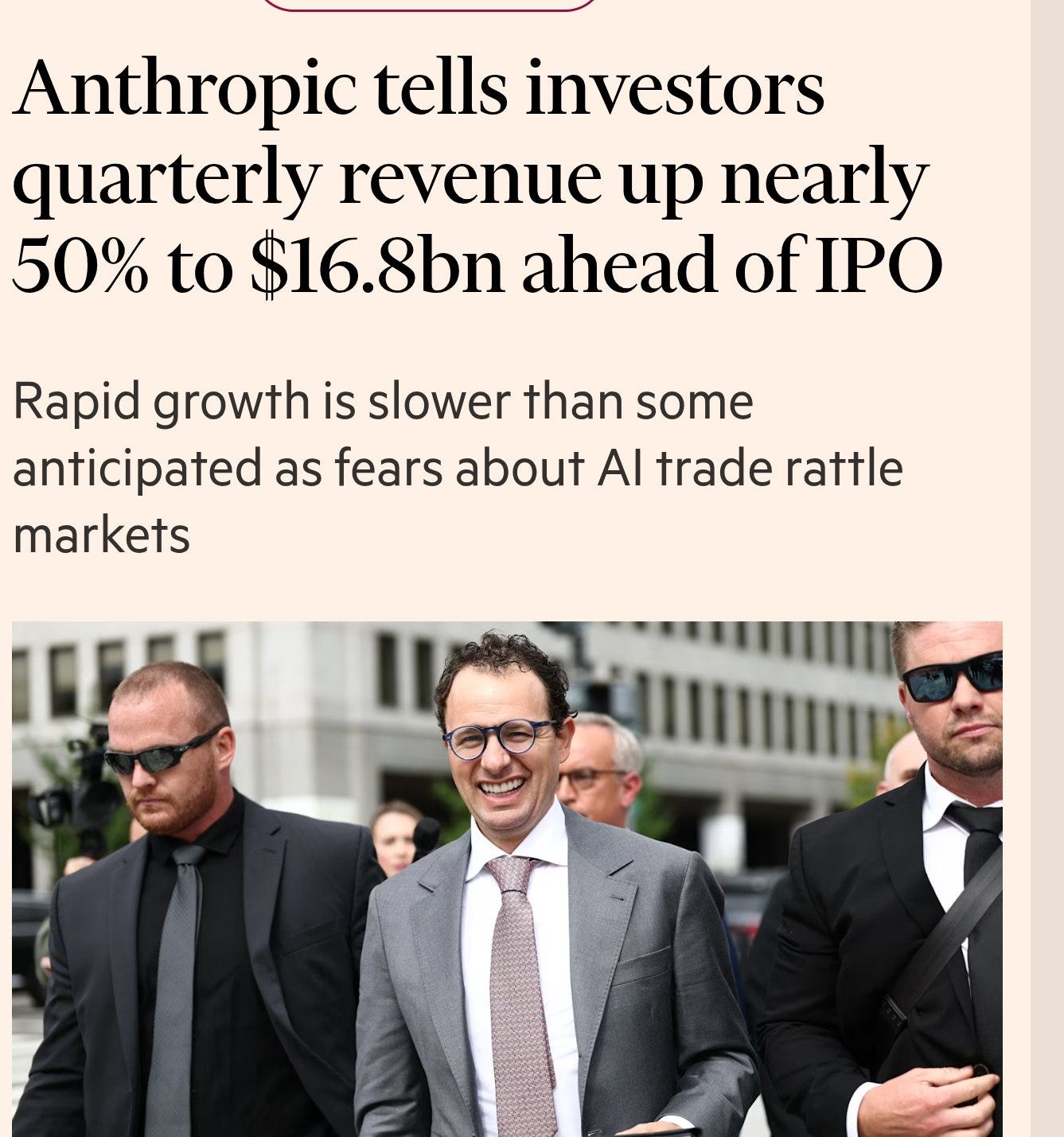
> The company told investors it earns $1.70 for every $1 spent on compute, which puts compute near 59% of revenue and implies its 85% adjusted gross margin excludes much of that spending.
> Distillation by rival labs, which train their models on Claude’s outputs, had made up 5% to 7% of Anthropic’s revenue until the company cut it back materially in the third quarter.
> Anthropic reported adjusted profitability for a second straight quarter and an 11% adjusted operating margin, though executives warned heavy spending on compute and biomedical research could change that.
> SemiAnalysis projects annualized revenue of roughly $74B, while some investors had predicted during the summer that the figure would pass $100B by year-end.
> Meta and Microsoft, two major customers, have moved toward their own AI tools, and price cuts against OpenAI and cheaper Chinese models have compressed what each customer pays.
> Bankers have floated an IPO raising more than $100B at about $2T, which would surpass SpaceX’s $1.77T listing in June as the largest offering ever.
> An early S-1 draft devoted almost a third of its length to risk factors, including AI models behaving unpredictably or maliciously and what Anthropic described as possible existential risks to humanity.
🗞️ SpaceXAI launched Grok Voice 3.0, ranks first on the Speech-to-Speech Index by Artificial Analysis
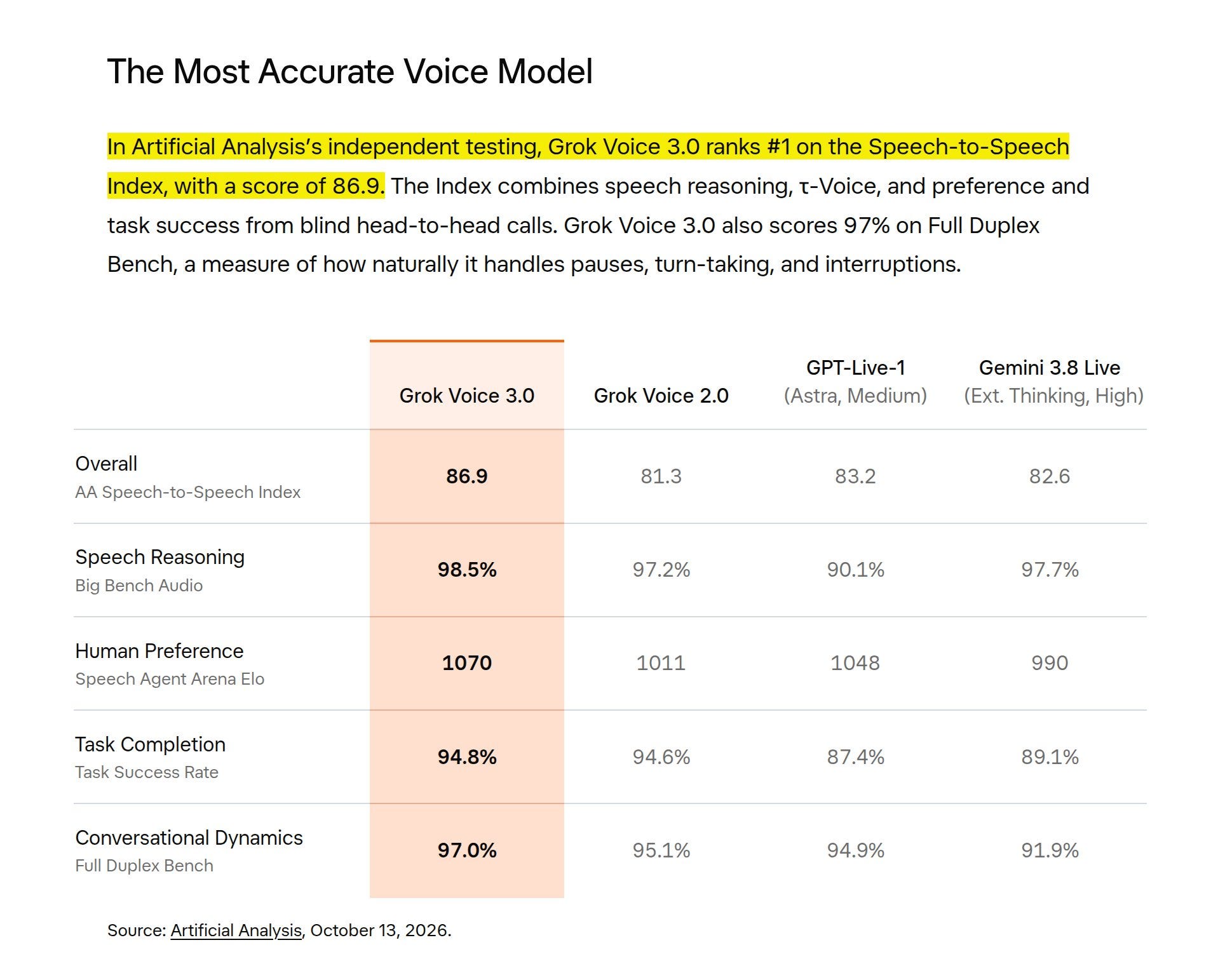
The Artificial Analysis index blends spoken reasoning, simulated support calls, blind preference votes and task success, where GPT-Live-1 (Astra, Medium) reaches 83.2.
The largest gain comes on τ-Voice, where a simulated caller asks the model to rebook flights or dispute charges using domain tools and a policy document.
There, Grok’s success rate jumped from 56.5% under Grok Voice 2.0 to 71.6%.
Grok’s edge is speed: it answers 40% sooner than GPT-Live-1, whose 1.34 seconds implies roughly 0.8 seconds, slightly slower than Grok Voice 2.0’s 0.70.
It also costs $0.025 per task on Artificial Analysis’s Big Bench Audio run, against $0.030 for GPT-Live-1 and $0.055 for GPT-Realtime-2.1 (High).
Grok Voice 3.0 at work inside Tesla. it handles millions of conversations a day in Tesla. Drivers can use Connectors for simple requests like checking their calendar or answering an email, and Grok Bot for bigger tasks like ordering a coffee or booking dinner—all completely hands-free (see it on X). Grok Voice 3.0 also powers Grok Bot’s voice mode.
🗞️ WSJ reported how the leading AI labs are now regularly running counterespionage drills for their employees.

OpenAI teaches staff to hide anything with its logo outside the office and treat even kitchen and cleaning crews as possible leaks, with regular reminders on Slack.
That level of paranoia reflects how much value now sits in a few labs with around $3.5 trillion upcoming IPO coming for them.
That’s a wrap for today, see you all tomorrow.