
Read time: 11 min
📚 Browse past editions here.
( I publish this newletter daily. Noise-free, actionable, applied-AI developments only).
⚡In today’s Edition (09-July-2026):
🗞️ OpenAI Launches GPT-5.6 Sol across ChatGPT and API and also unveils ChatGPT work agent to field tasks for hours.
🗞️ SpaceXAI just released Grok 4.5 for coding agents at $2/M input and $6/M output tokens.
🗞️ A warning for anyone using autonomous agents Google DeepMind’s paper.
🗞️ Anthropic just published the story of Claude Code and that how Boris Cherny went from 10% AI-written code in 2025 to 100% in 2026.
🗞️ Multi-modal AI for comprehensive breast cancer prognostication
🗞️ ByteDance and Alibaba are shutting custom AI companions before China’s humanlike AI rules hit consumer apps.
🇨🇳 This is bad news. Now, frontier open source access may be in question.
🗞️ Cloudflare just announced a monetization layer for the agentic web, using x402 at the edge to make AI agents pay before resources respond.
🗞️ Anthropic just brought Claude Cowork on mobile and web as usage data shows most users are not coding.
🗞️ OpenAI Launches GPT-5.6 Sol across ChatGPT and API and also unveils ChatGPT work agent to field tasks for hours.
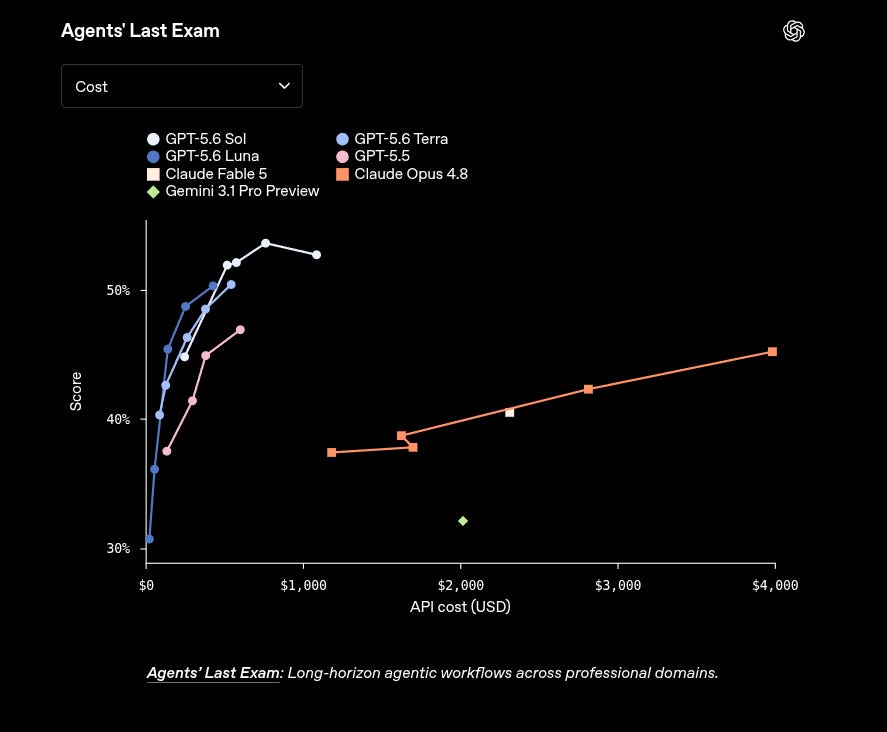
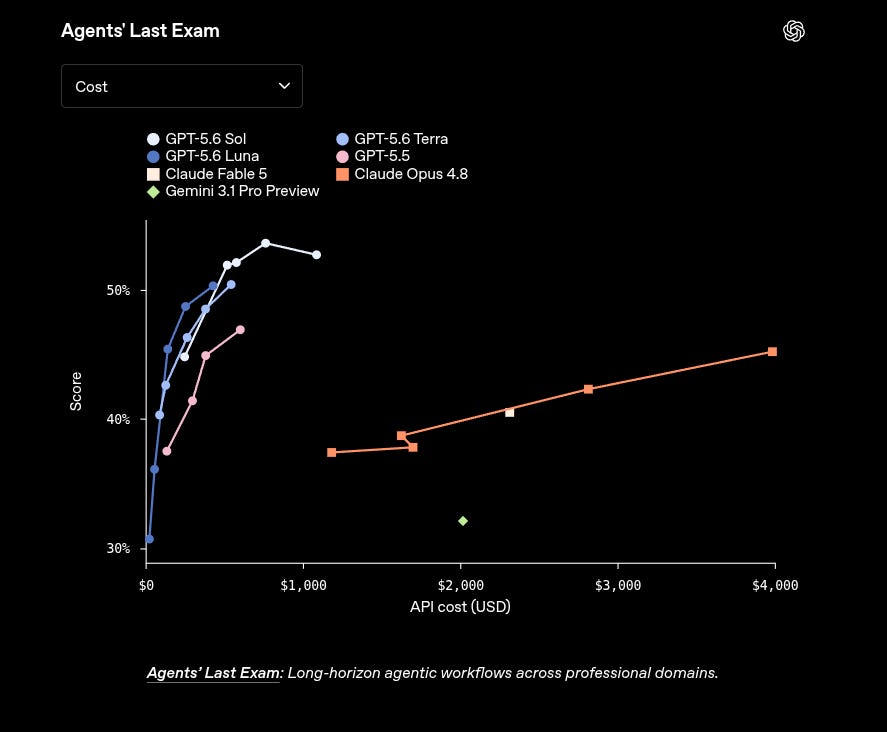
OpenAI launches GPT 5.6 globally with Sol, Terra and Luna models. The GPT 5.6 family is designed to serve different performance and pricing needs.
GPT 5.6 Sol - OpenAI’s flagship and most capable model
GPT 5.6 Terra - Lower-cost model with performance comparable to GPT 5.5
GPT 5.6 Luna - Fastest and most affordable option for high-volume workloads
OpenAI also turned ChatGPT from a chat box into a supervised agent, a “super app” for finishing work. ChatGPT Work starts with a goal, then converts that goal into a sequence of actions.
Now you can ask it for a board update, forecast pack, customer brief, or launch report. The system then gathers context from selected apps, files, chats, plugins, and web sources. WATCH THE VIDEO.
It can ask clarifying questions, propose a plan, and wait before doing sensitive steps. After approval, it creates the needed artifact, not just a written answer.
That artifact can be a spreadsheet, deck, document, dashboard, tracker, website, or analysis page. The finance demo showed the full mechanism through a realistic monthly reporting workflow.
ChatGPT Work read forecast material, ran variance analysis, updated Excel, built slides, created a site, and shared it through Slack. The new power comes from combining reasoning, context access, coding, computer use, and document creation.
Codex gives it the ability to write the software behind interactive outputs when needed. That is why a spreadsheet can become an interactive dashboard instead of a static summary.
The new visualize feature can read messy tabular data, find themes, rank issues, and create explorable views. Hosted Sites turn those outputs into shareable web pages for reports, dashboards, calendars, prototypes, and internal tools.
OpenAI says Hosted Sites are being made available for paid users. The desktop app adds local-machine action, but only on supported desktop platforms.
On macOS and Windows, ChatGPT can work with local files, browser tabs, and desktop apps. The demo showed it getting its own cursor and organizing Apple Notes in the background.
That is different from uploading a PDF, because it can operate inside apps while you continue working. Email access does not happen magically, because Gmail or Outlook must be connected and authorized.
OpenAI now describes connectors as apps that let ChatGPT search and reference approved information. ChatGPT for Excel and Google Sheets adds a spreadsheet-native sidebar for building, updating, cleaning, and explaining workbooks.
GPT-5.6 is the model layer underneath, with Sol, Terra, and Luna serving different workload levels. OpenAI said Sol is rolling out to paid plans within 24 hours. OpenAI also said Terra and Luna are coming to free users over that same window.
ChatGPT Work runs on web, mobile, and desktop, while desktop gives the deepest machine access. The real change is not better chat, but turning scattered context into finished deliverables.
🗞️ SpaceXAI just released Grok 4.5 for coding agents at $2/M input and $6/M output tokens.
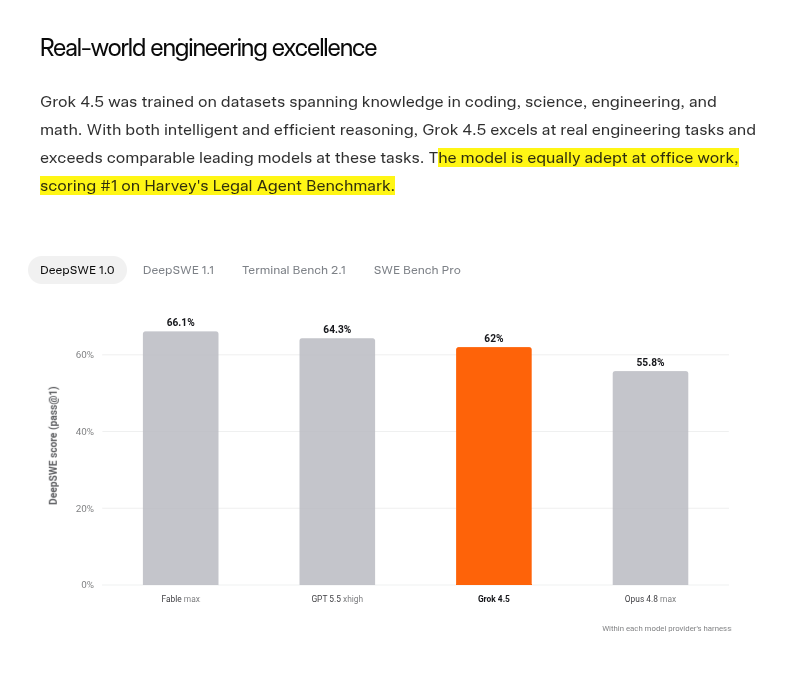
The release targets coding, agentic tasks, and knowledge work across science, engineering, and math after training alongside Cursor.
On DeepSWE 1.0, Grok 4.5 lands at 62%, ahead of Opus 4.8 max at 55.8%, behind only Fable max and GPT 5.5 xhigh. Large coding models usually spend too many steps reading files, trying tools, and repairing mistakes.
Grok 4.5 attacks that cost by training on engineering tasks, Cursor data, and long agent runs. So Grok 4.5 looks most persuasive where latency, cost, and tool use matter together.
It can build complex Excel models using web research, multi-sheet formulas, and notes for future reference. Also can use native PowerPoint shapes for diagrams, design slide content, and write clear prose in Word.
The model is now in Grok Build, Cursor, and SpaceXAI’s API, but not yet in the EU. Free access is limited-time inside Grok Build and Cursor, including x. ai/cli onboarding.
Artificial Analysis placed Grok 4.5 at 4th on its Intelligence Index, behind Fable 5, GPT-5.5, and Opus 4.8. It also ranked 4th on GDPval-AA v2, behind only Anthropic’s newest Claude models. Its main strength is efficiency: Grok 4.5 used about 60% fewer output tokens on average than Opus 4.8 on the same Intelligence Index tasks, and nearly 25% of the total tokens Fable 5 used in Claude Code for similar coding-agent work. Cursor’s own data shows the same pattern, with Grok 4.5 averaging under 16,000 output tokens on SWE-Bench Pro tasks, around 4.2 times fewer than Opus 4.8 in the same test.
Cursor’s benchmark chart also has a caveat. The company said an older snapshot of the Cursor codebase was accidentally part of Grok 4.5’s training data, which gave it an advantage on CursorBench that Cursor says it cannot fully measure. That data has since been removed from future training runs. It is a small transparency detail, but one to keep in mind before treating benchmark charts as final truth.
🗞️ A warning for anyone using autonomous agents Google DeepMind’s paper.
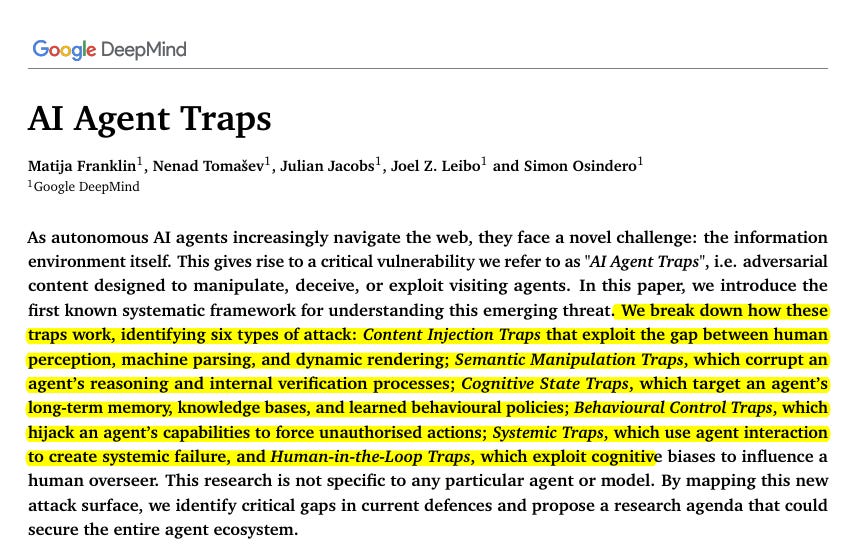
Gives the first clear taxonomy of 6 attack types where harmful websites can detect AI agents and show them hidden content humans never see, like
- Instructions buried in HTML comments or white-on-white text
- Steganography in image pixels
- Override commands in PDFs, metadata, or even speaker notes
- Memory poisoning that persists across sessions
- Goal hijacking and cross-agent cascades in multi-agent setups
The real security problem for AI agents is not just the model, but the environment it reads. The web itself can be weaponized against autonomous AI agents. As agents increasingly browse the internet, read emails, execute transactions, and spawn sub-agents, the information environment becomes an attack surface.
In one cited benchmark, hidden prompt injections embedded in web content partially commandeered agents in up to 86% of scenarios, sub-agent hijacking working 58–90% of the time, and data exfiltration attacks clearing 80% across five different agent architectures.
That reframes the whole debate.
We usually talk about model safety as if the danger sits inside the weights, but agents do something more fragile: they browse, retrieve, remember, and act on untrusted material in real time.
Here’s the thing to worry about.
A web page does not have to look malicious to be dangerous to an agent, because the agent may parse what humans never see: hidden HTML comments, metadata, CSS-hidden text, formatting syntax, or adversarial content embedded in images and other media.
The threat gets more serious once memory enters the loop.
If an agent uses RAG or persistent memory, poisoning no longer has to win in one shot. It can sit quietly in a corpus or memory store and activate later, which is why the paper highlights results showing latent memory poisoning above 80% attack success with less than 0.1% data contamination.
🗞️ Anthropic just published the story of Claude Code and that how Boris Cherny went from 10% AI-written code in 2025 to 100% in 2026.
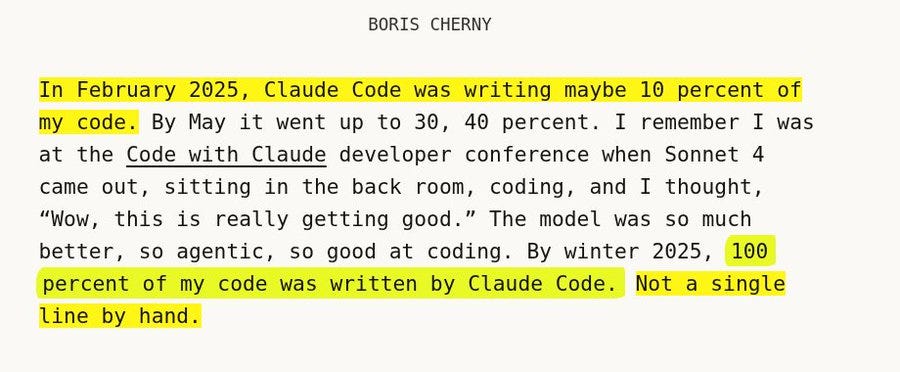
Research kept improving agentic coding through shells, file search, code execution, and edit loops.
In 2024, Boris Cherny’s Claude CLI prototype was the first real terminal product in this direction. A small team shipped fast, used Claude Code to build Claude Code, and fixed feedback quickly. The 2025 launch was buggy at first, but Claude Sonnet 4 and subscriptions made it take off.
🗞️ Multi-modal AI for comprehensive breast cancer prognostication

New nature-published research built a breast cancer AI test that uses routine microscope slides and clinical data to rank recurrence risk correctly about 71% of the time.
A foundation AI model learned tissue patterns from 400M patches, then helped turn routine slides into recurrence-risk evidence. Breast cancer care already uses tumor size, nodes, receptors, grade, and sometimes gene assays.
Those signals guide therapy, but they still miss hidden recurrence risk inside ordinary tissue structure. This system adds the missing visual layer by reading digitized pathology slides alongside routine clinical data. Kestrel (the pretrained image-reading engine they used inside their new breast cancer test) learned patterns from 400M pathology patches, then scored tumor morphology without hand labels.
🗞️ ByteDance and Alibaba are shutting custom AI companions before China’s humanlike AI rules hit consumer apps.
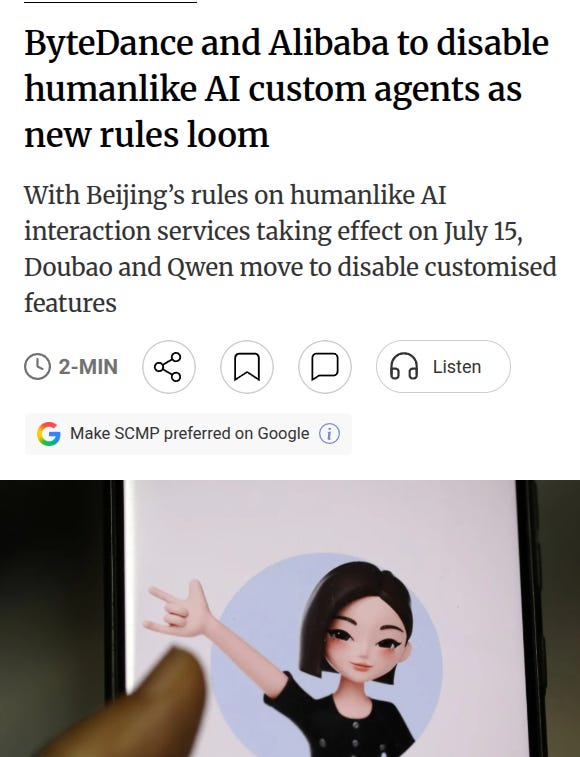
Doubao and Qwen let users create named assistants, tutors, characters, and emotionally steady companions.
The old model turned a general chatbot into a persona that remembered tone. China’s new rule targets AI services that imitate human personalities for sustained emotional interaction.
Regulators are drawing a line between useful automation and software that builds attachment, agents now remember, plan, call tools, and shape behavior. Doubao says its agent feature goes offline on 07-15, with related data gone from view after 10-15. Qwen will disable humanlike and user-created agents earlier, then remove broader agent services on 07-15. The user backlash shows these products already became emotional infrastructure for some people.
🇨🇳This is bad news. Now, frontier open source access also will probably no more be available for all.
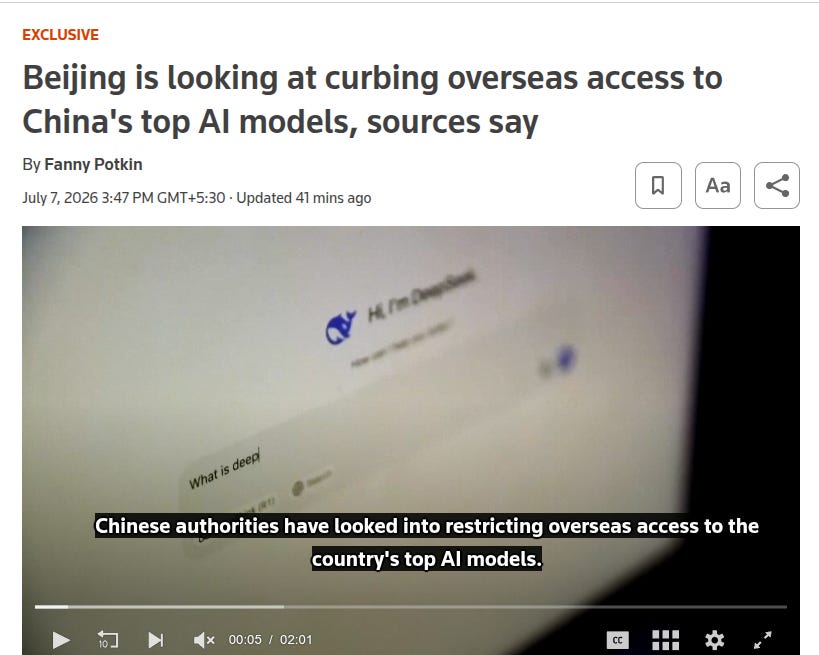
China is preparing to limit foreign access to its strongest AI models, a move that could raise global AI costs and split the model market by nationality.
Beijing has held recent talks with Alibaba, ByteDance, and Z .ai about keeping advanced Chinese models inside China, including models not yet released. The Ministry of Commerce led the discussions, with China’s state planning agency also present, which signals export control rather than routine platform regulation.
The targets include closed models and open-weight systems, so the issue is not only API access but downloadable model power. Chinese officials also discussed treating leaks or theft of proprietary AI as a national security offence, not merely an IP dispute.
New limits on who can fund Chinese AI startups were also discussed, which would tighten control over capital, talent, and model access together. Foreign companies could lose access to low-cost Chinese models just as those models become strong enough for serious production work.
Washington has already restricted access to advanced U.S. models on security grounds. China now fears Mythos could find software vulnerabilities and be used against Chinese interests, so both sides are treating AI as strategic infrastructure.
Beijing has also investigated Chinese AI startups that moved abroad and pushed Meta to unwind a $2B Manus deal.
A likely path is tiered control: basic open tools get filings, stronger systems face reviews, and frontier models stay domestic.
This would be a major setback for open AI access because model progress would no longer spread mainly through product quality and price.
🗞️ Cloudflare just announced a monetization layer for the agentic web, using x402 at the edge to make AI agents pay before resources respond.
Means AI agents may start paying websites directly, instead of only reading free pages or using prearranged API keys.
Today, most AI products reach outside information through contracts, scraping, search partnerships, paid APIs, or free public pages. Cloudflare wants to make that access behave more like a paid HTTP request.
When an agent asks for a protected resource, Cloudflare can block the request before origin access. A website owner can say, “this dataset costs $0.01 per call,” and Cloudflare enforces that rule before the request reaches the server.
The agent asks for the resource, gets a 402 Payment Required response, pays, retries with payment proof, and receives the answer. The major change is that payment becomes part of the web request itself.
For a normal AI user, this could mean your assistant sometimes needs spending permission before completing a task.
A research agent might say, “this source costs $0.03, should I use it?”
A shopping agent might pay for inventory data, product comparisons, booking tools, or private market data. The catch is that this only works when agents carry wallets, understand x402, and obey spending rules.
🗞️ Anthropic just brought Claude Cowork on mobile and web as usage data shows most users are not coding.

Marks a strategic inflection for Anthropic. This move links AI coding agents aimed at developers with the much larger knowledge-worker market that never opens a terminal.
Now, your tasks can start on a laptop, continue autonomously in the background, and be reviewed from a phone — even after the user closes the app entirely. The new web and mobile Cowork rollout is starting with Max subscribers first, while other paid plans are expected later.
As to usage limit, Claude uses a shared usage pool across Claude .ai, Claude Desktop, Claude Code, and related surfaces, so Cowork usage counts against the same plan limits. Earlier, Cowork lived mainly inside the desktop app, where it could use local files and browser access. Now, Max users can start work on desktop, check progress on mobile, and continue through web.
Claude Cowork is for assigning a task that can run across tools, files, and time. The mechanism is closer to delegation than normal chatting because you assign a job, not just ask a question.
Claude can gather information, organize files, draft documents, compare updates, clean spreadsheets, and ask for approval. Cloud processing lets those steps continue on Anthropic’s servers while your own device is offline. Your phone then becomes a control panel for updates, decisions, approvals, and finished outputs.
This matters because most office work is not hard because each step is brilliant.
It is hard because the steps are scattered across email, docs, notes, calls, spreadsheets, and reminders.
Cowork is aimed at that messy middle layer, where people lose hours turning fragments into usable work. For a regular consumer, the benefit is less manual coordination and fewer half-finished admin tasks.
You could ask it to prepare a meeting brief, summarize a thread, draft a follow-up, or build a checklist. You still review the result, but you do not personally carry every small step.
The big deal is that AI is moving from “answer my question” to “finish this task and come back.” This is why mobile access matters because real work often needs approval when you are away from your desk.
The catch is trust, since useful agents need access to personal files, messages, and work tools. Anthropic is trying to make the agent useful while keeping the human in charge of final decisions.
This was timed on purpose. Together with the mobile launch, Anthropic published data from 1.2 million anonymized Claude Cowork sessions collected between May 11 and May 31, spanning 600,000+ organizations. The data shows most Cowork activity sits outside coding.
So Cowork now is aimed at a much bigger crowd: knowledge workers with laptops, spreadsheets, and slides.
That’s a wrap for today, see you all tomorrow.
great article, full of useful information