
Read time: 10 min
📚 Browse past editions here.
( I publish this newletter daily. Noise-free, actionable, applied-AI developments only).
⚡In today’s Edition (26-Feb-2026):
🗞️ Perplexity just launched Perplexity Computer, a system that moves beyond answering simple questions to executing entire complex workflows automatically.
🗞️ Anthropic just updated its Cowork system to let Claude act as a specialized financial assistant that can jump between apps like Excel and PowerPoint while keeping all your data in sync.
🗞️ Anthropic just released the Remote Control feature that lets developers start a coding task on their computer and finish it from their phone.
🗞️ New banger from Andrej Karpathy about how rapidly agents are improving
🗞️ Perplexity just launched Perplexity Computer, a system that moves beyond answering simple questions to executing entire complex workflows automatically.
It can research, design, code, deploy, and manage any project end-to-end.
remembers your past work, and is secure by default.
Hundreds of connectors, persistent memory, files, and web access.
massively multi-model, computer orchestrates models to run agents in parallel.
delegates deep research tasks to Gemini, generates images with Nano Banana, and handles video creation using Veo 3.1.
Basically, it looks at a screen and decides which button to click or what to type next, using models like Anthropic Opus 4.6 or GPT 5.2 across your connected apps. “In total, Computer can route work across 19 different models.”
This tool acts like a manager that breaks down a large goal into smaller tasks. It then picks the best model out of 19 options for each small task.
“Perplexity Computer uses usage‑based pricing with optional sub‑agent model selection and spending caps.” The service is available for Max subscribers at $200 per month. These users receive 10,000 credits every month to spend on running these automated agents.
So overall, Perplexity Computer acts like a digital worker that takes a large goal and breaks it down into smaller manageable tasks. It then creates separate automated bots, known as sub-agents, to handle each specific piece of the puzzle simultaneously.
One bot might search the web for data while another bot writes the code to process that exact information. These bots run inside isolated digital spaces that have their own real web browsers and file systems.
Instead of relying on just one system, this platform uses multi-model orchestration to assign the best specific tool for each job.
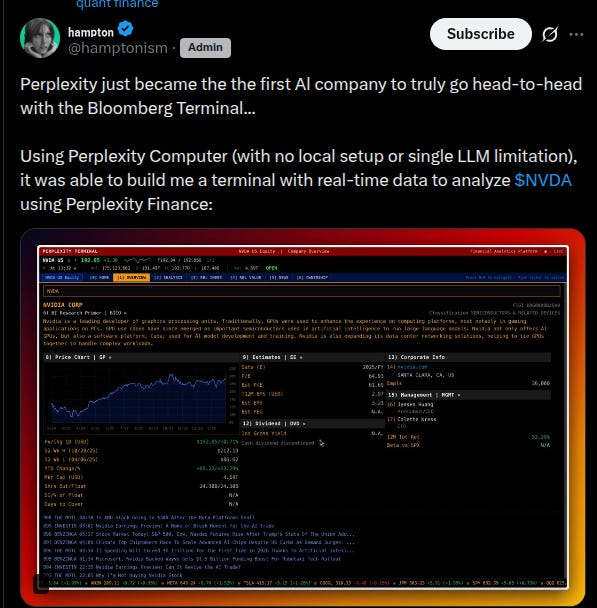
In a viral post on Twitter, Perplexity AI also is being shown that it turned A $30,000/Year Bloomberg Terminal Into A $200/month subscription.
Perplexity just became the the first Al company to truly go head-to-head with the Bloomberg Terminal...
Using Perplexity Computer (with no local setup or single LLM limitation), it was able to build me a terminal with real-time data to analyze $NVDA using Perplexity Finance:
🗞️ Anthropic just updated its Cowork system to let Claude act as a specialized financial assistant that can jump between apps like Excel and PowerPoint while keeping all your data in sync.
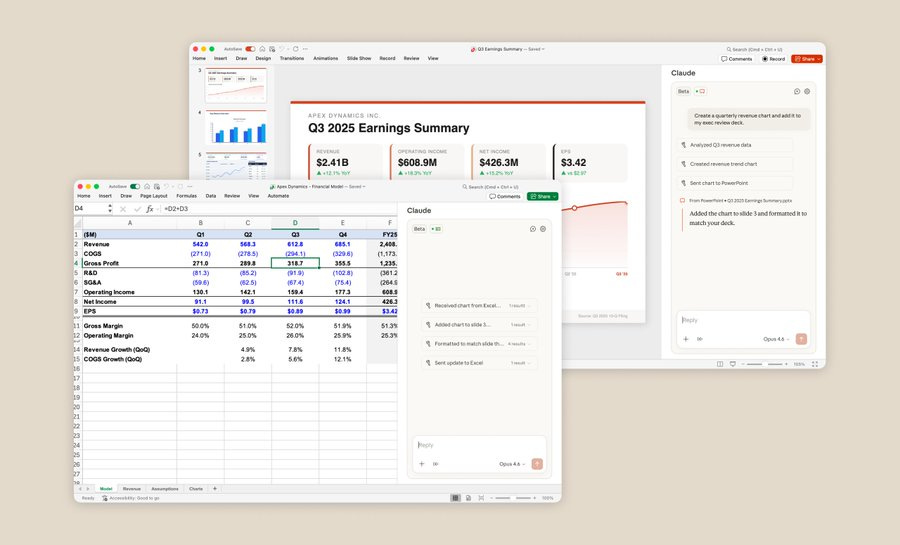
Claude can now grab data from a spreadsheet, update a financial model, and then immediately build a summary slide in a presentation deck without you having to copy and paste anything. The system uses plugins, a sets of tools that give AI specific “skills” for professional tasks like equity research or investment banking.
Anthropic released 5 of these plugins that help with things like reviewing deal documents, parsing earnings transcripts, and checking portfolio risk for wealth management. To make sure the AI isn’t just guessing, they added connectors for FactSet and MSCI, which are major platforms that professionals use for real-time market data and index tracking.
Other partners like S&P Global and LSEG are also plugging in their own data, so Claude can look at live yield curves or company “tear sheets” while it helps you write a report. By using these connectors, the AI stays grounded in high-quality, institutional data rather than relying only on the general knowledge it learned during training.
Currently, this cross-app functionality is available in a research preview for paid users on Mac and Windows through specific add-ins. Under-the-hood, the Cowork system uses Model Context Protocol to connect Claude to specific company data and tools. Earlier users had to copy and paste everything from a research site into Excel and then into PowerPoint, but this system handles that transition automatically. It allows the AI to keep the context or the history of a project as it moves from one program to another.
Anthropic also added connectors for Google Workspace, Docusign, Apollo, Clay, Outreach, Similarweb, MSCI, FactSet, WordPress, and Harvey, along with plugins from Slack by Salesforce, LSEG, S&P Global, Common Room, and Tribe AI.

🗞️ Anthropic just released the Remote Control feature that lets developers start a coding task on their computer and finish it from their phone.
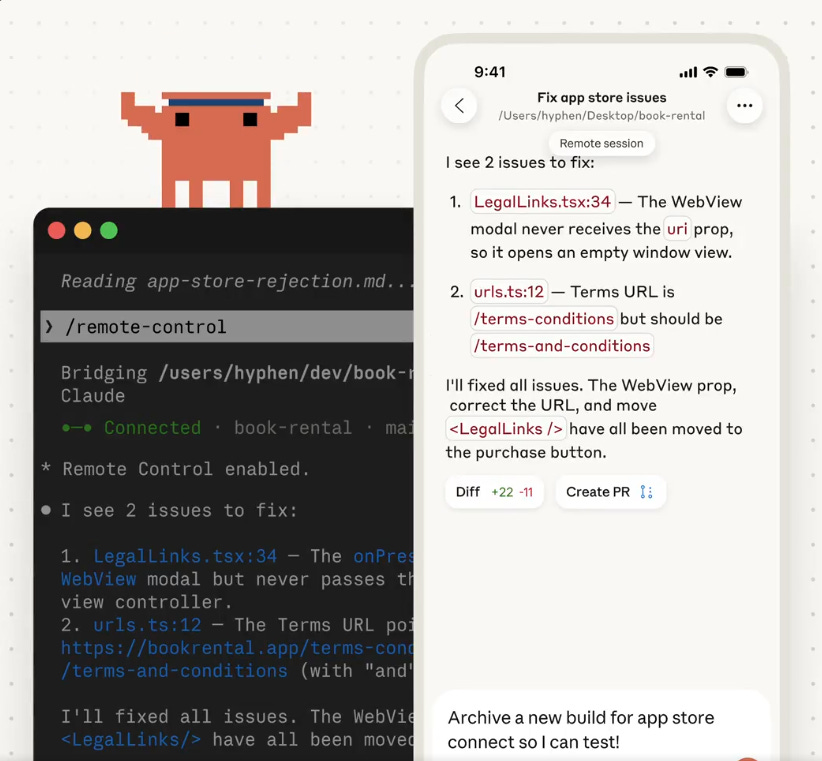
Seamless terminal handoffs across cevices
This new update acts as a secure bridge so you can manage local files remotely without opening vulnerable network ports. Until now, developers who wanted to step away had to use unreliable workarounds like third-party tunneling tools to keep their sessions alive.
This new official tool fixes this by creating a direct streaming connection between your local terminal and the Claude mobile app. When you type the setup command, your desktop makes a secure outbound connection to the Anthropic servers.
This means your computer simply checks for new instructions without ever exposing your private network to the outside internet. All your sensitive project files and local servers stay exactly where they are on your physical machine.
Only the chat messages and the final results travel through the encrypted bridge. If your laptop goes to sleep or your internet connection drops, the system waits and automatically reconnects once you are back online.
Users can easily link their devices by scanning a QR code generated right in the terminal. Currently, this feature launched is available as a research preview for subscribers on the Claude Max tier.
This shift allows a single person to manage massive software projects from anywhere, changing how we think about traditional software engineering. Overall, it’s a massive leap for developer mobility because it securely untethers complex workflows from physical workstations.
🗞️ New banger from Andrej Karpathy about how rapidly agents are improving
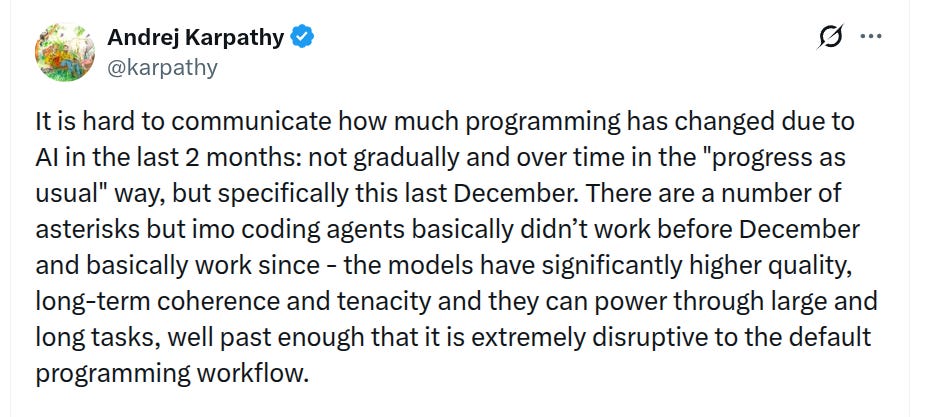
Andrej explains how software development changed completely this past December. AI agents that write code finally became smart and persistent enough to finish huge programming tasks on their own.
You will learn how to move from manually typing code to directing these smart workers using plain English commands. The main idea is to teach you agentic engineering, where you set up master systems that manage many coding agents at the same time.
The text shares a real example of an agent building a local video analysis dashboard in just 30 minutes. You get to see how the agent autonomously sets up servers, writes the code, and fixes its own bugs without any human help.
You will also learn why these systems still strictly need your high-level direction and oversight to work right. The article shows you how to break large projects down into smaller chunks that agents can easily test and verify.
That’s a wrap for today, see you all tomorrow.